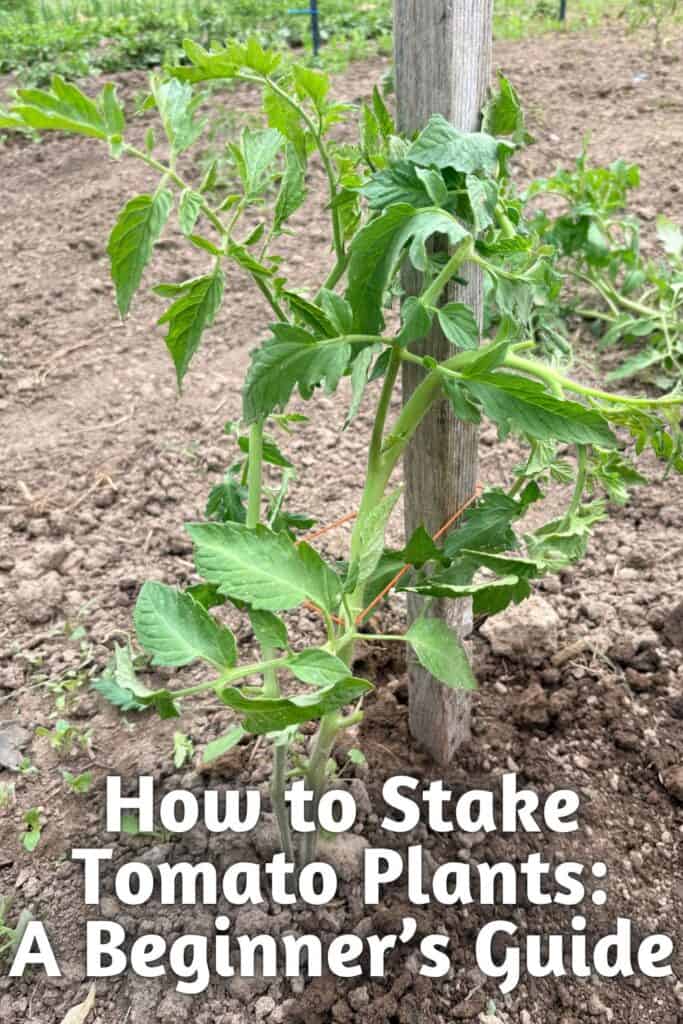
How to Stake Tomato Plants: A Beginner’s Guide
If you have ever watched a tomato plant flop over under the weight of its own fruit, you already know why staking matters. There are a lot of different methods out there, from wire cages to the Florida weave, but I am going to walk you through the easiest way I have found after years of growing tomatoes here on our place. It is simple, it is cheap, and it works so well that I have grown indeterminate tomato plants over six feet tall using nothing but an eight foot wooden 2×2 and some string.
Determinate vs Indeterminate Tomatoes: Know Your Type of Plant
Before you grab a shovel, you need to know what type of tomato plant you are dealing with. Determinate tomatoes are bush tomatoes. They grow to a set size, set their fruit all around the same time, and then they are pretty much done for the season.
Indeterminate tomatoes are a completely different type of plant. Indeterminate varieties keep growing and producing right up until frost, which means the main stem can get long and heavy by the end of the season. This single stake method I am sharing today is built specifically for indeterminate tomato plants, so keep that in mind before you commit to it for a bush type tomato.
Different Methods for Different Ways to Stake Tomato Plants
Home gardeners have plenty of options when it comes to keeping tomato vines upright. Wire tomato cages are a great option for smaller or determinate varieties, and you can even build your own tomato cages out of cattle panels if you want something extra sturdy. Some commercial growers prefer the Florida weave, which uses a row of end stakes and natural fiber twines woven back and forth down the whole row.
Bamboo stakes, a bamboo pole, or even PVC pipe can all work in a pinch too. I have tried a lot of these different ways over the years, and while wire cages are a good choice for smaller plants, they just cannot handle the height and weight of a mature indeterminate tomato crop. That is where the single wooden stake method earns its spot as my best way to stake tomato plants.
Why I Use an Eight Foot Wooden 2×2
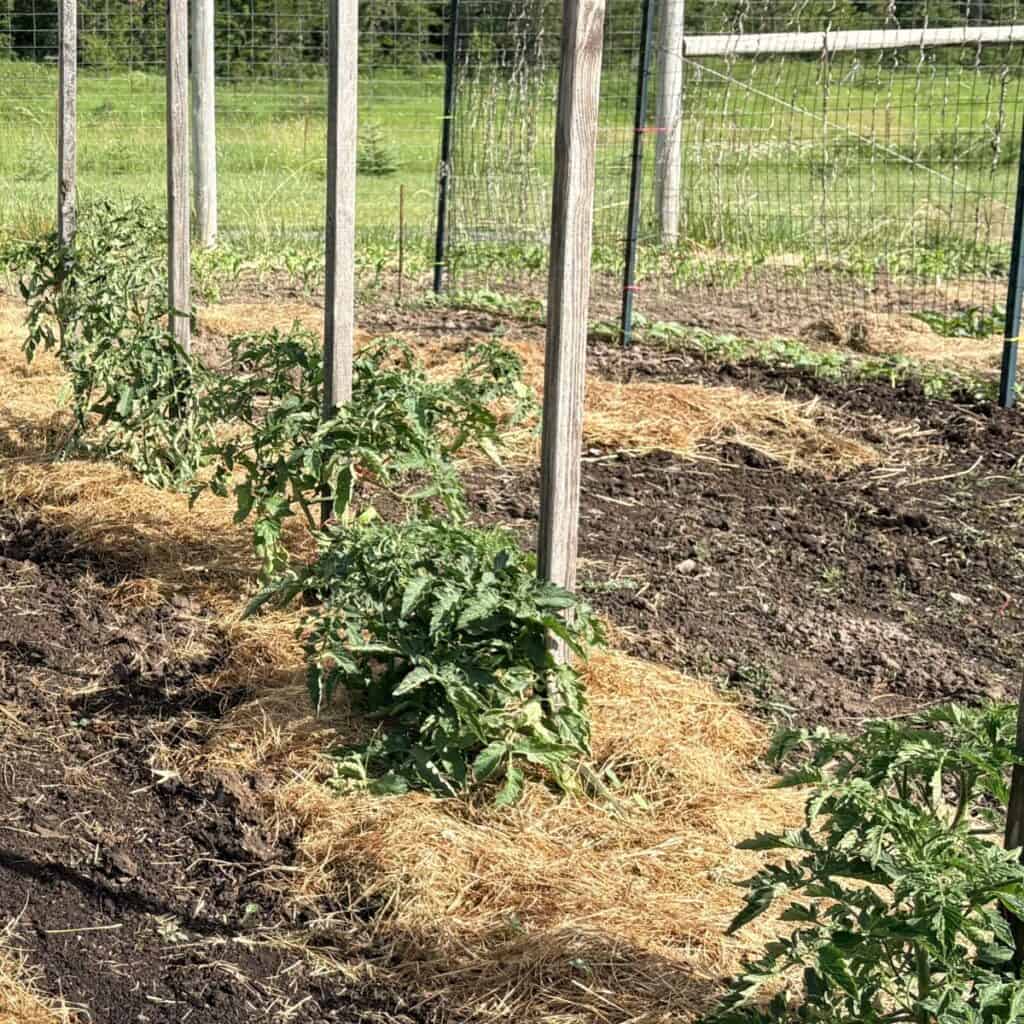
An eight foot wooden 2×2 might sound like overkill for a tomato seedling, but trust me on this one. Once your indeterminate tomato plants hit peak growing season, the weight of the fruit and the weight of the plant itself will test even sturdy stakes. A wooden 2×2 gives you the sturdy material you need to keep plants upright all the way to the end of the season without snapping or leaning.
You can find these at almost any lumber yard, and they are inexpensive enough to buy several for your whole vegetable garden. I like them so much better than bamboo stakes or wire cages for indeterminate tomatoes because they simply do not bend under pressure. Once you switch to this method, you will wonder why you spent so much time fighting with flimsy stakes.
How to Set Up Your Tomato Stakes
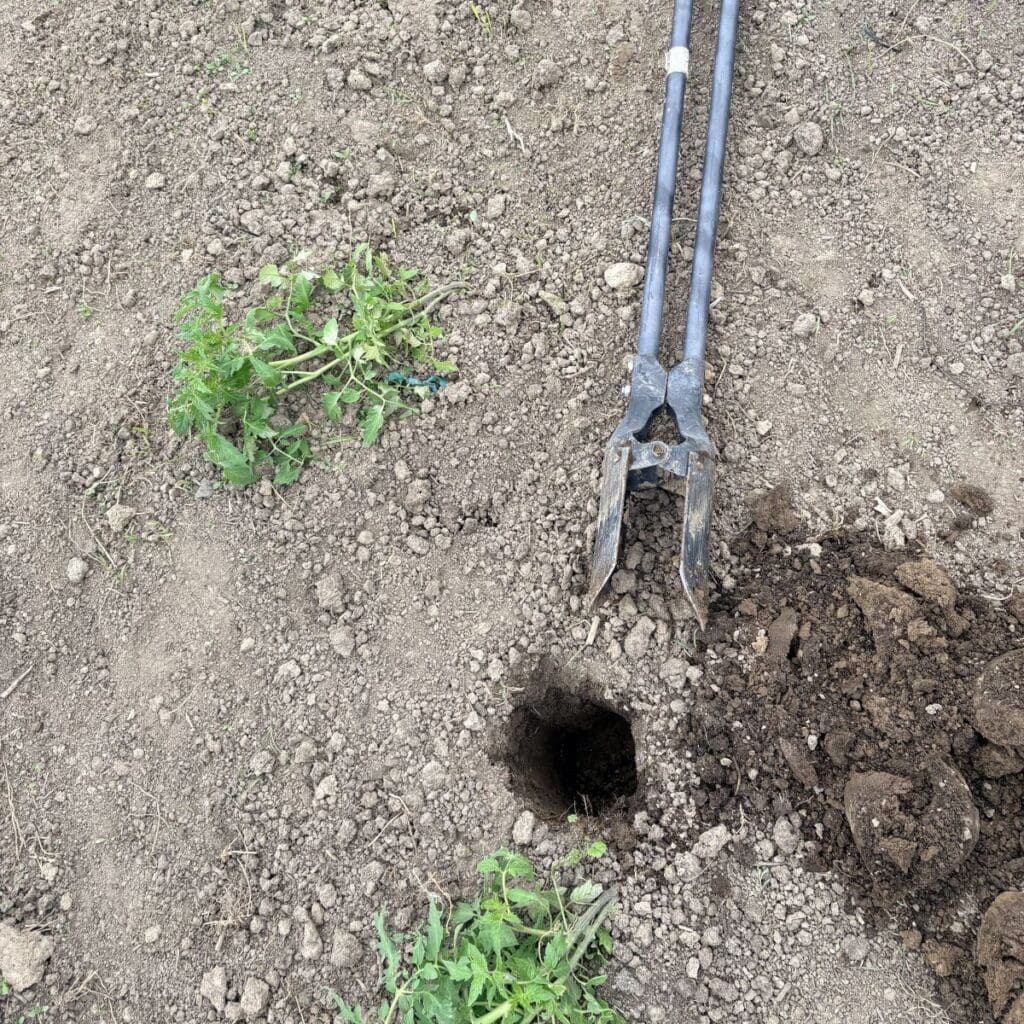
- Step 1: Dig your hole. Use a post hole digger to dig a hole about a foot to a foot and a half deep right where your tomato seedling will go. This gives your first stake enough depth to stay put once the plant matures and the fruit gets heavy.
- Step 2: Place the post. Set your eight foot wooden 2×2 into the hole so you have plenty of stake left above ground for tying as the plant grows. Backfill around the base of the post with soil and tamp it down firmly so it will not wobble.
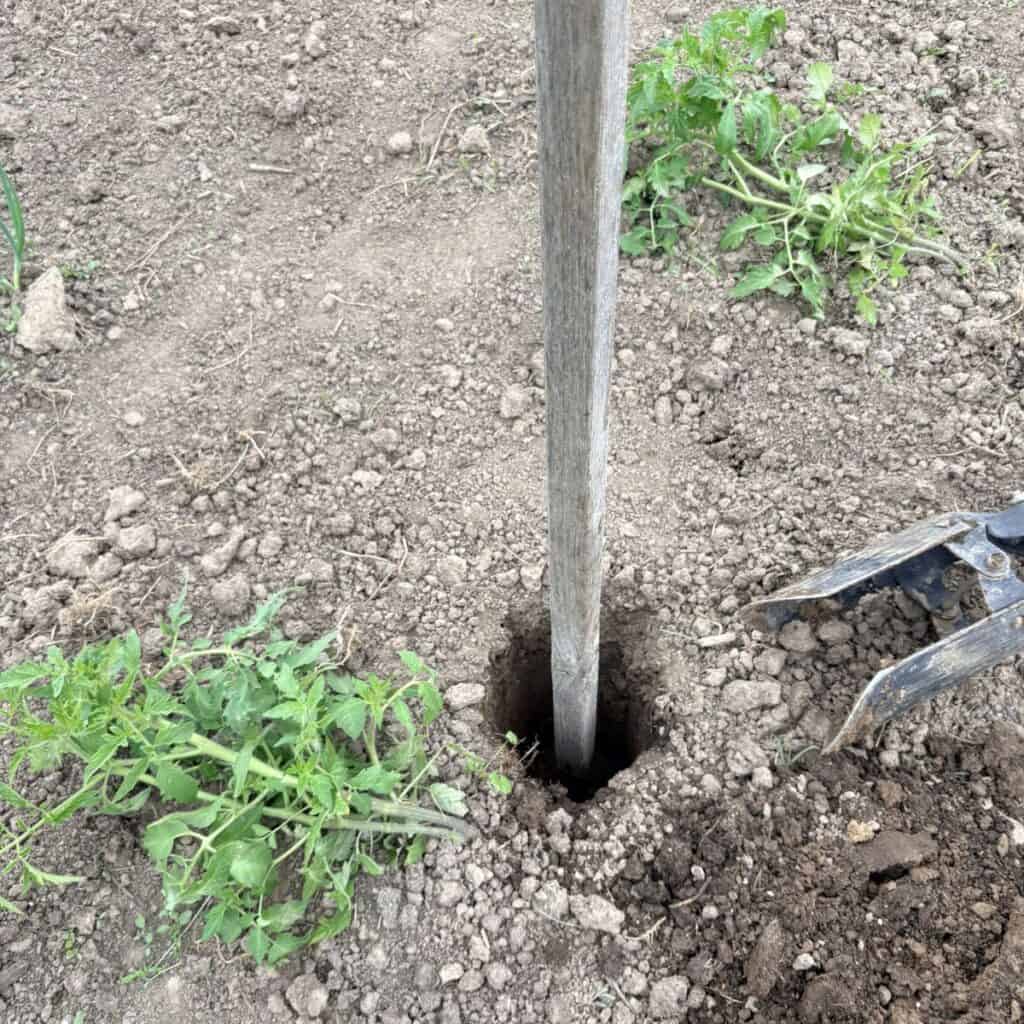
- Step 3: Plant your tomato seedling. Plant your tomato right next to the post, close enough that the main stem will naturally lean toward it as it grows. This makes tying easy from the very beginning instead of trying to wrangle a sprawling plant later.
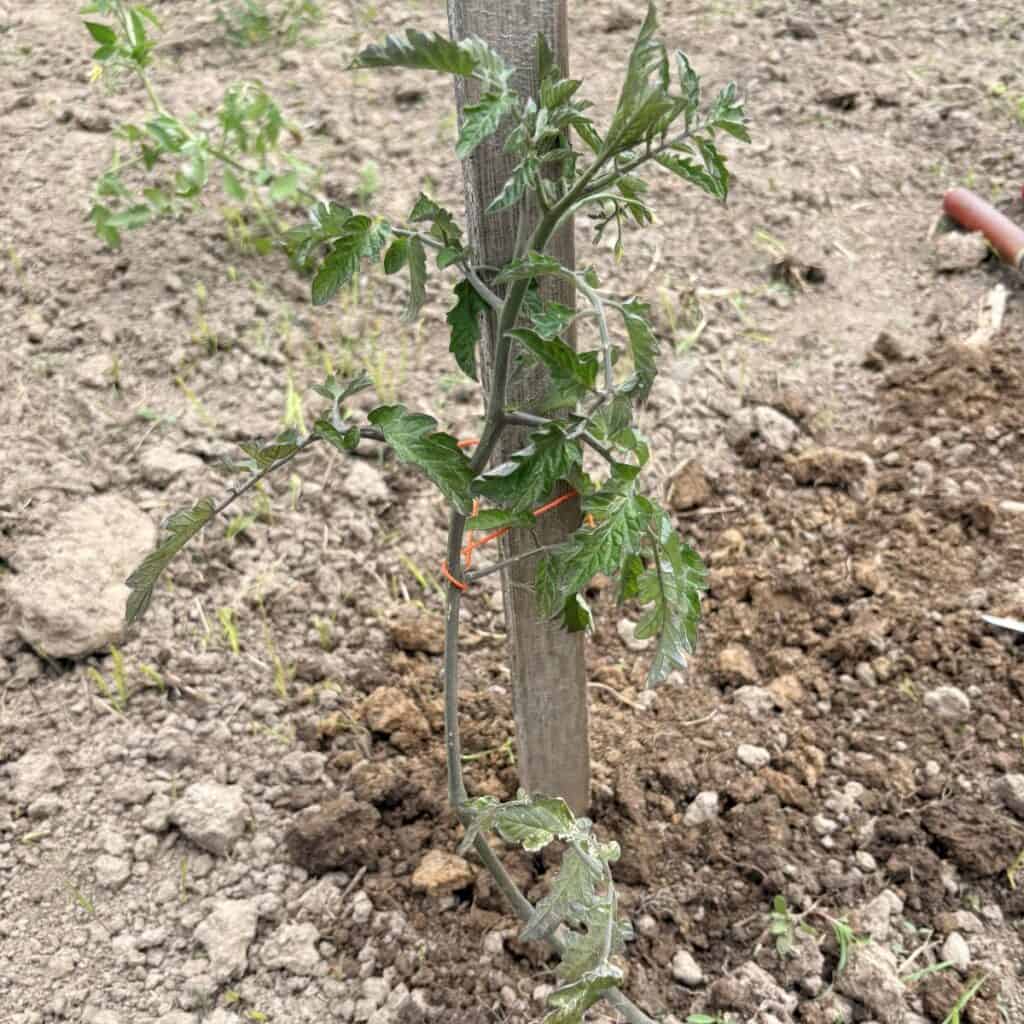
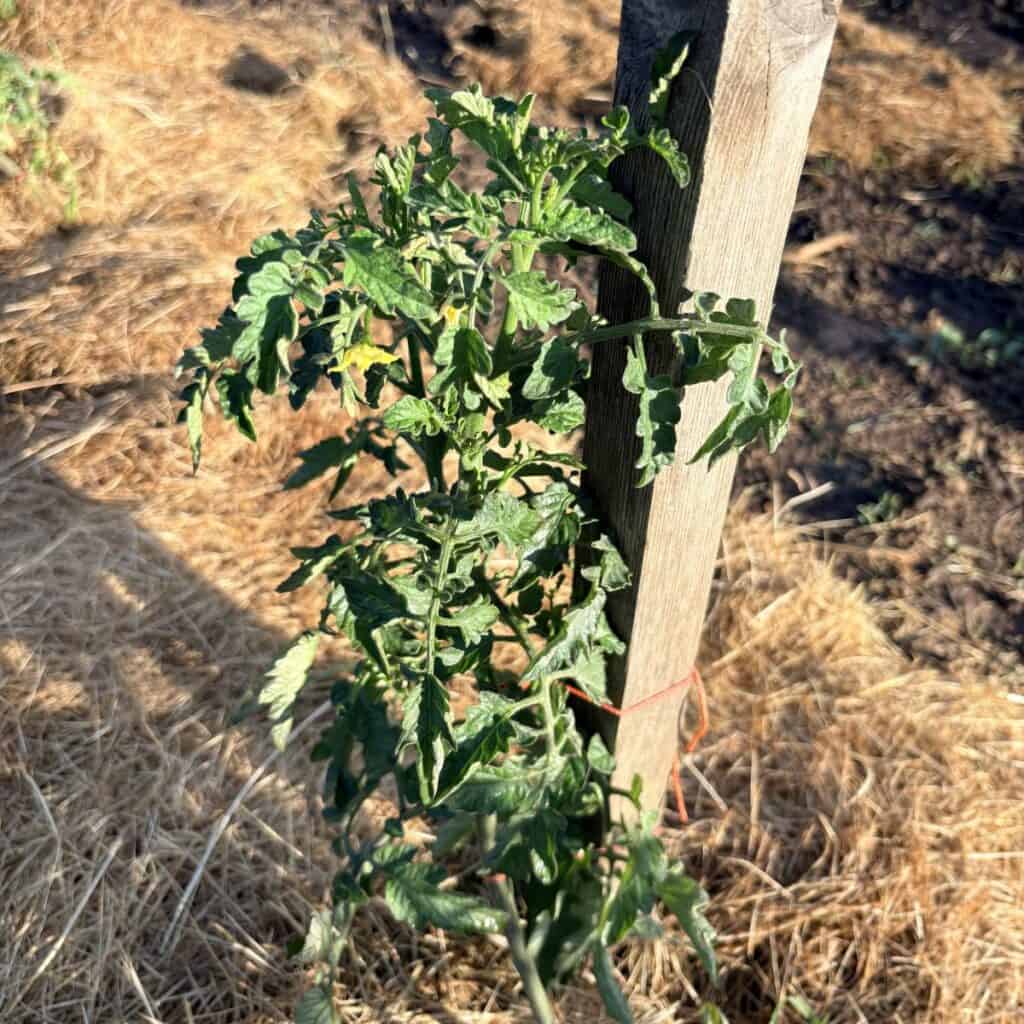
- Step 4: Tie as you go. As the growing plant gets taller, loosely tie the main stem to the post using tomato twine every twelve to eighteen inches. Leave a little slack in each tie so the plant stem has room to thicken without the twine cutting in.
- Step 5: Prune your suckers. Pinch off some of the suckers that form in the joint between the main stem and the branches, especially lower on the plant. This keeps the plant’s energy going toward ripe tomatoes instead of a jungle of extra growth, and it makes it so much easier to keep tying the top of the plant as it reaches for the sky.
Why This Is the Best Way for Home Gardeners
I did not always stake my tomatoes this way. I learned the hard way one summer when a whole row of indeterminate tomatoes toppled over in a wind storm because I had them in flimsy wire cages that were never built for a plant that size. Ever since then, this single stake method has been my go to for every vegetable garden I plant.
Keeping the tomato vines up off the ground keeps ripe tomatoes clean and gives you easy access for picking at the end of the row. It also encourages airflow around the plant, which cuts down on fungal diseases like powdery mildew that thrive in damp, crowded foliage. Less disease means more delicious tomatoes for you and your family by the end of the season.
A Few Extra Tips for Sturdy Stakes and Healthy Plants
If you are growing cherry tomatoes alongside your bigger indeterminate varieties, you can usually get away with a shorter stake since they tend to stay a bit more manageable. For anything you expect to get tall and heavy, though, do not skimp on stake length just to save a trip to the garden stores. Adding additional stakes down the row also gives extra stability if you get a lot of wind where you garden.
Some folks like to use zip ties or even an old nylon stocking instead of tomato twine, and either one works fine as long as it will not cut into the plant stem as it grows. Whatever you use, just remember to keep checking your ties throughout the growing season, since a plant’s stem changes fast once the root system really gets established. A few minutes of maintenance now saves you a much bigger mess by the time harvest rolls around.
Final Thoughts on Staking Tomato Plants
If this is your first time trying this method, I think you will be surprised at how much sturdier your indeterminate tomatoes look by midsummer. It does take a little planning at planting time, but it is one of those hands-on projects that pays off all season long. Give the single stake method a try this year, and I bet it becomes your go to just like it did mine.

Pin for Later