
Zucchini Pineapple: Easy Canning Recipe
If you have zucchini plants in your garden, you know exactly what this time of year looks like. One day you have a handful of zucchini. Two days later you have piles of zucchini lined up on the counter, the porch, and probably the passenger seat of your car.
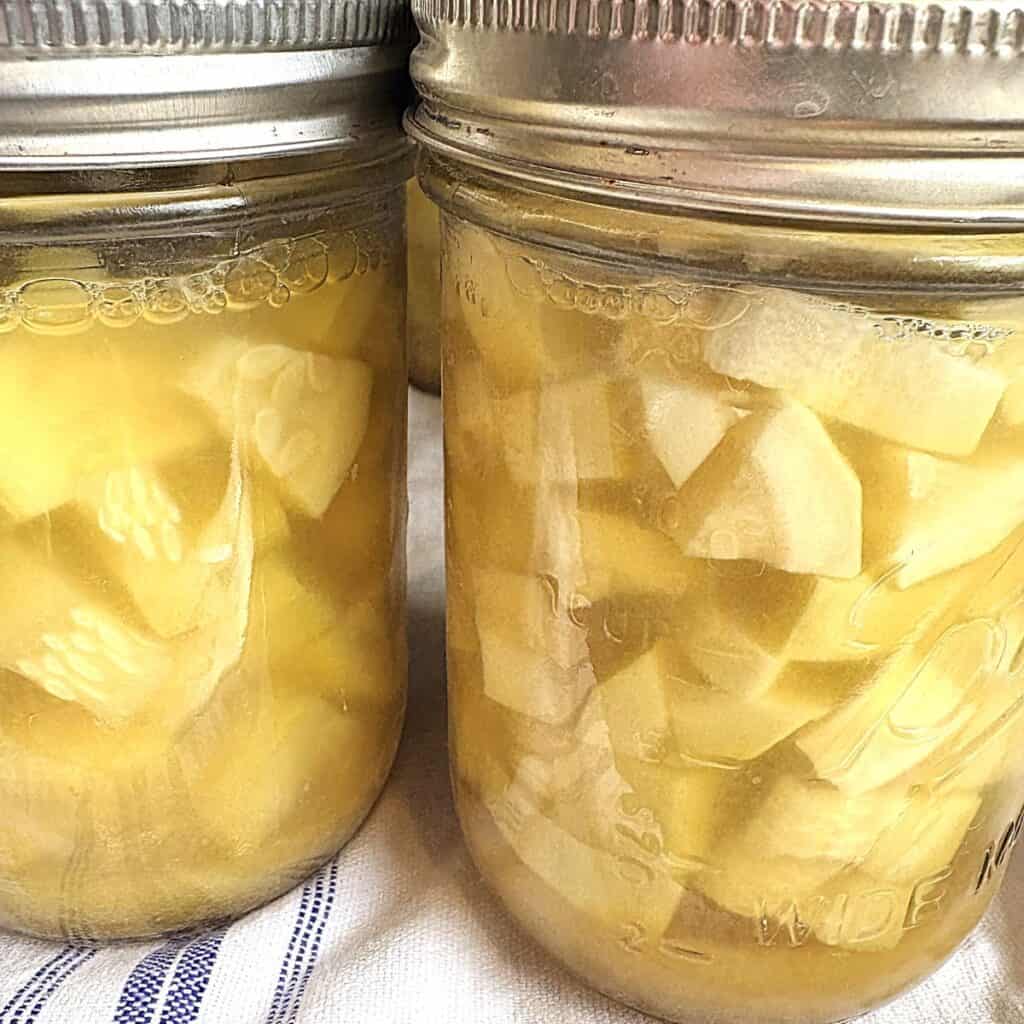
Every summer I find myself hunting for new recipes just to keep up with the extra zucchini. This year I finally tried one that had been sitting in the back of my mind for weeks: canned mock pineapple, made from nothing more than fresh zucchini, lemon juice, a little sugar, and pineapple juice.
The Skeptic Meets the Recipe Book
I had been seeing this method floating around online for a while. Peel zucchini, cut it into inch cubes, pack it into jars, cover it with pineapple juice, and can it. People swore the finished product tasted just like the real thing.
I was skeptical. Would it really taste like pineapple, or just like sweet, watery zucchini? Would the zucchini turn to mush in the jar?
I filed it away as one of those “maybe someday” recipes and went on with my week, while my zucchini plants kept doing what zucchini plants do best.
Then one afternoon I was flipping through my great-grandmother’s recipe book, the one I keep in my kitchen and reach for constantly, and there it was. A recipe for canned zucchini pineapple, diligently typed out on her typewriter, more than sixty years old. My great-grandmother was an incredible cook, and if a recipe made it into her book, I trust it.
This wasn’t some new trend. This was a tried and true recipe that families have been using for generations, long before it ever showed up on Pinterest. That was enough to convince me to finally give it a try.
The Day I Became “Magic”
While I was peeling zucchini and getting my jars ready, my four year old wandered into the kitchen and asked what I was doing. Only half thinking about it, I told him I was magic, and that I was about to turn zucchini into pineapple. He gave me a very serious look, informed me that nobody is really magic, and wandered back off to play.
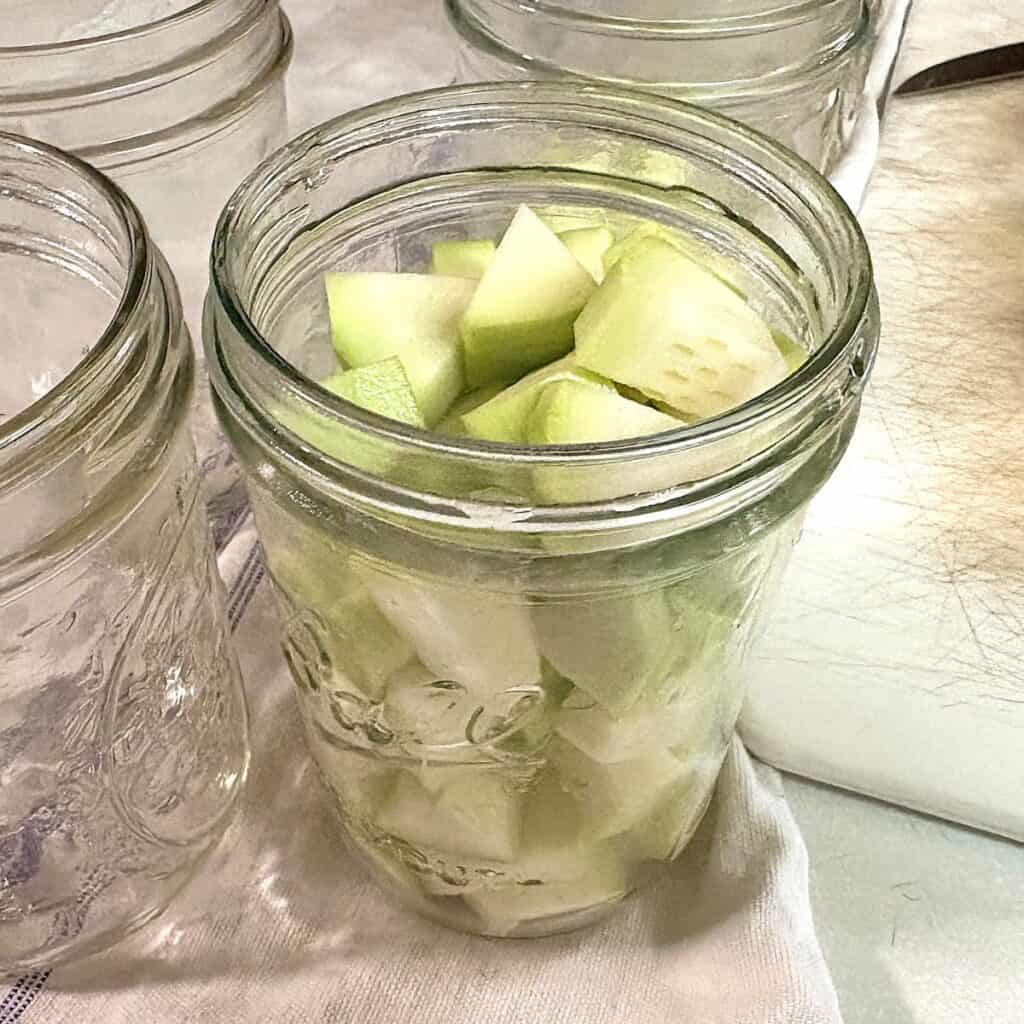
I packed the zucchini cubes into pint jars, added the sugar and lemon juice, topped each jar with pineapple juice, and processed them in my boiling water bath canner. Once the jars had cooled to room temperature, I couldn’t wait any longer. I popped one open just to taste it myself.
It genuinely tasted like pineapple. Sweet, tangy, with that same texture you get from canned pineapple chunks. I called my son over and let him try a piece.
His eyes went wide, and he shouted, “Mom, you really are magic!” before running off to tell his siblings that I had actually turned zucchini into pineapple. I did not correct him.
So What Is “Mock Pineapple,” Exactly?
This is one of those old fashioned “mock” recipes, in the same family as mock apple pie, where a humble, plentiful ingredient is dressed up to taste like something else entirely. Zucchini has almost no flavor of its own, which is exactly why it works so well here. When it sits in a sweetened, acidified pineapple juice mixture and goes through the canning process, the zucchini soaks up that flavor and takes on a texture very close to canned pineapple.
It’s not a full substitution in every recipe that calls for fresh pineapples, but for eating straight from the jar, or stirring into savory dishes, it is a delicious way to stretch your harvest.
A quick note on safety, since I always want to be upfront about this on the blog. Zucchini itself is a low-acid food, and low-acid foods carry a greater danger of bacterial growth if they aren’t processed correctly. That’s why canning them usually calls for a pressure canner rather than a boiling-water bath canner.
This particular recipe works because the pineapple juice, sugar, and lemon juice combine to bring the jar’s contents into high-acid territory, similar to how the National Center for Home Food Preservation classifies acidified foods.
Supplies Needed to make Zucchini Pineapple


Zucchini Pineapple Canning Recipe
This is a raw pack canning recipe, which means the zucchini goes into the jars raw and gets covered with a cold juice mixture.
Ingredients
- 5 to 7 zucchini, 8 to 10 inches long
- 2 tablespoons granulated sugar per jar
- 2 tablespoons lemon juice per jar
- 46 ounces unsweetened pineapple juice (100% juice, no added sugar)
Method
- Peel your zucchini and cut it into 1-inch cubes. Shredded zucchini works too if you prefer a softer, more pineapple tidbit style finished product, but I like the texture of cubes best.
- Pack the zucchini cubes into clean pint jars.
- Add 2 tablespoons of sugar and 2 tablespoons of lemon juice to each jar.
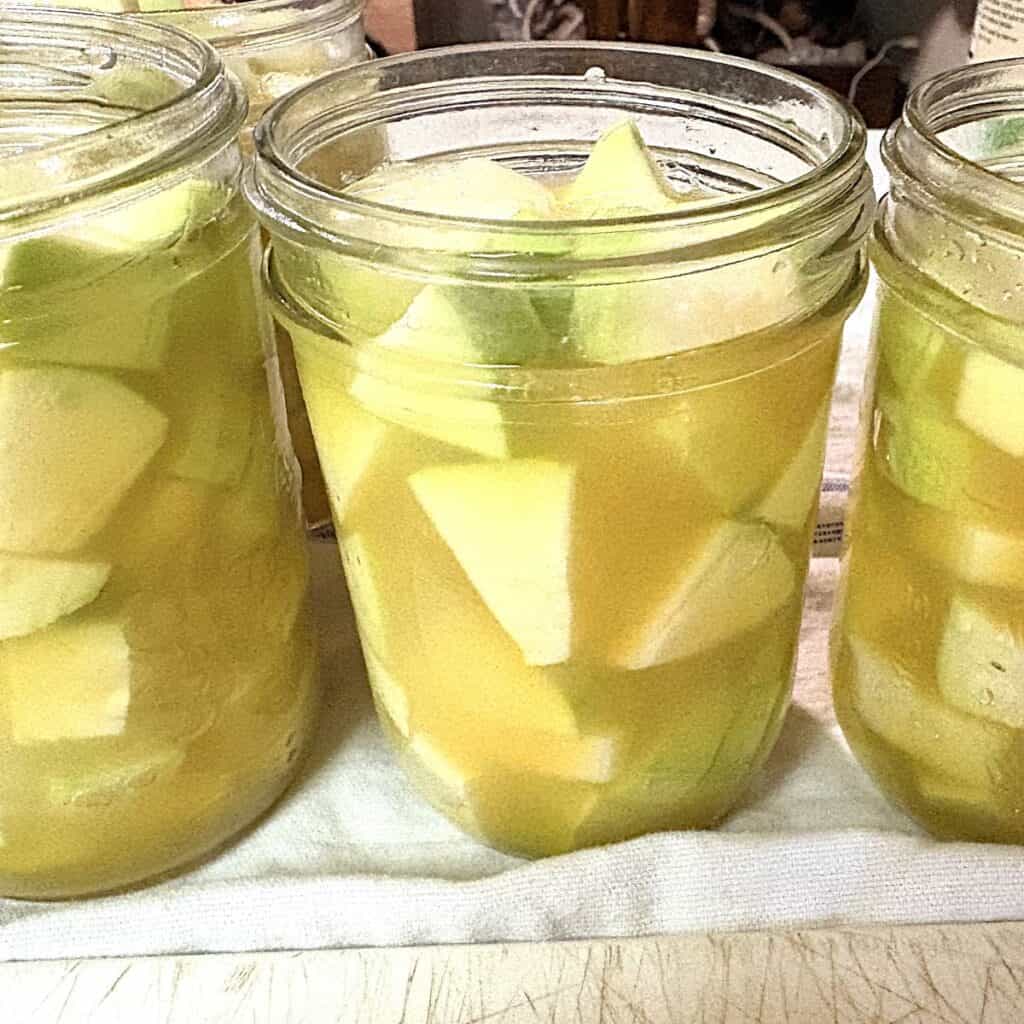
- Pour the pineapple juice over the zucchini, leaving 1 to 1.5 inches of headspace. Never go below a ½-inch headspace minimum, or you risk seal failure.
- Slide a plastic butter knife or thin spatula down the inside of the jar to release any trapped air bubbles.
- Wipe the jar rims clean with a paper towel, place your lids on, and turn the rings finger tight.
- Process in a boiling water bath canner for 25 minutes, adjusting your processing times for altitude as needed.
- Remove the jars with a jar lifter or slotted spoon and let them cool undisturbed to room temperature before checking the seals.
A Few Tips From My Kitchen
Use fresh zucchini rather than zucchini that’s been sitting in a frozen state. Fresh zucchini holds its texture much better through the canning process.
Look for medium zucchini for the best texture. Very large zucchini tends to be more watery and seedy, which pulls too much moisture into the jar and can dilute the juice mixture.
Sealed jars store beautifully at room temperature, just like any other home canning project.
More Ways to Use Your Mock Pineapple
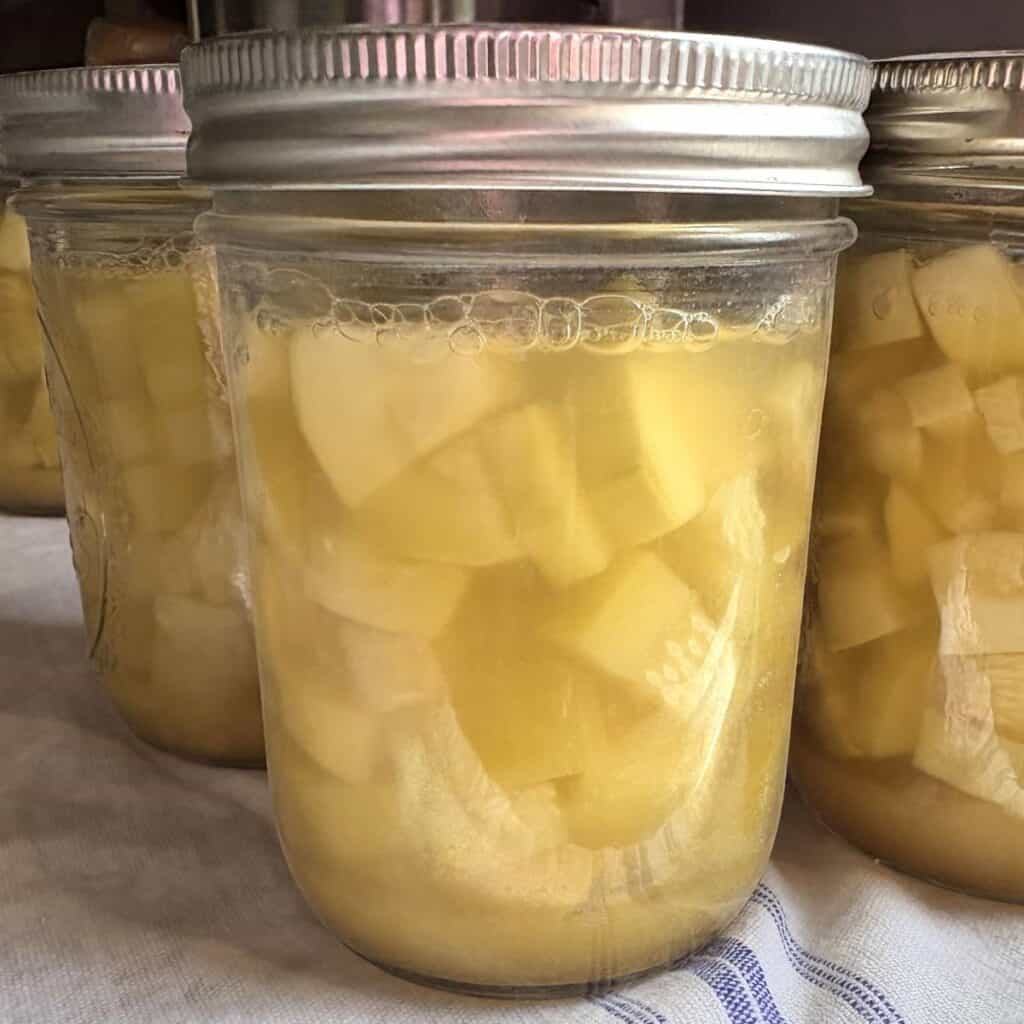
Once you’ve got a shelf of these jars, you’ll find plenty of favorite ways to use them. Drain a jar and fold the “faux pineapple” into a pineapple zucchini bread or zucchini pineapple bread in place of crushed pineapple. Mix a jar into a quick fruit salad or serve some alongside grilled meat.
Or just eat it straight from a small bowl with a fork, the way my kids do now every time I open a new jar.
This has quickly become a new favorite canning recipe in our house, and I have a feeling it will become one of yours too. There’s something special about pulling a recipe out of a book that’s older than your grandparents. It still holds up as one of the best ways to use up excess zucchini, sixty years later.
Other Great Zucchini Recipes
Easy Zucchini Bread with Raisins

Pin for Later
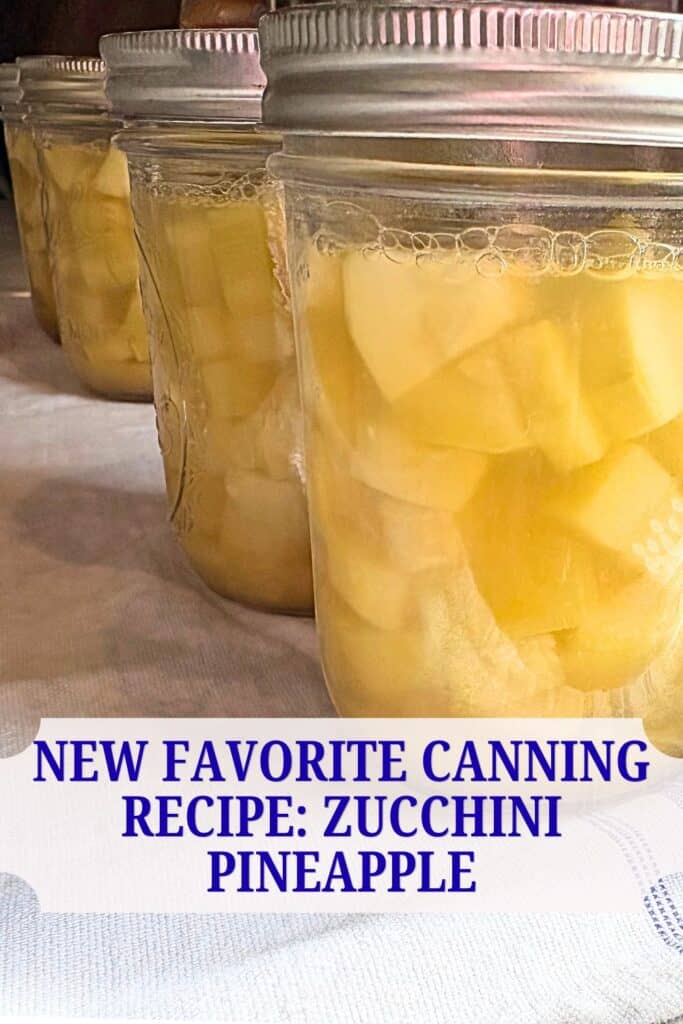

Zucchini Pineapple Canning Recipe
This is a raw pack canning recipe, which means the zucchini
goes into the jars raw and gets covered with a cold pineapple juice mixture.
Ingredients
- 5-7 whole zucchini
- 2 tablespoons sugar , per pint jar
- 2 tablespoons lemon juice , per pint jar
- 46 ounces unsweetened pineapple juice
Instructions
- Peel your zucchini and cut into 1-inch cubes. Shredded zucchini works too if your prefer a softer, more pineapple tidbit style finished product, but I like the texture of cubes best.
- Pack the zucchini cubes into clean pint jars.
- Add 2 tablespoons of sugar and 2 tablespoons of lemon juice to each jar.
- Pour the pineapple juice over the zucchini, leaving 1 to 1.5 inches of headspace. Never go below a 1/2 inch headspace minimum, or you risk seal failure.
- Slide a plastic butter knife or thin spatula down the inside of the jar to release any trapped air bubbles.
- Wipe the jar rims clean with a paper towel, place your lids on, and turn the rings finger tight.
- Process in a boiling water bath canner for 25 minutes (start timer when water is actively boiling), adjusting your processing times for altitude as needed.
- Remove the jars with a jar lifter and let them cool undisturbed to room temperature before checking seals.
Notes
The 25 minute processing time above is for altitudes of 1,000 feet or less. If you're canning at a higher altitude, add time to your boiling water bath canner processing times using the chart below.
- 0 to 1,000 ft: No adjustment
- 1,001 to 3,000 ft: Add 5 minutes
- 3,001 to 6,000 ft: Add 10 minutes
- 6,001 to 8,000 ft: Add 15 minutes
- 8,001 to 10,000 ft: Add 20 minutes
Nutrition Information:
Yield: 28 Serving Size: 1Amount Per Serving: Calories: 225Total Fat: 1gSaturated Fat: 0gUnsaturated Fat: 1gSodium: 9mgCarbohydrates: 54gFiber: 1gSugar: 41gProtein: 2g
East Fork Growing LLC is a participant in the Amazon Services LLC Associates Program, and the NutriMill affiliate program. These affiliate advertising programs are designed to provide a means for us to earn fees by linking to Amazon.com, NutriMill.com and affiliated sites. These products do not cost anymore to you, but we earn a small commission if you use our links. Thanks for your support!