
How Many Raspberry Plants per Square Foot: Plant Spacing
Raspberries are one of the most rewarding fruits to grow at home, and they come back bigger and better every year once established. Find out how many raspberry plants per square foot you can fit in your garden space. Whether you have a square foot garden, a dedicated raspberry bed, or an in ground raspberry patch, growing raspberries is one of the best ways to fill your kitchen with fresh fruit!
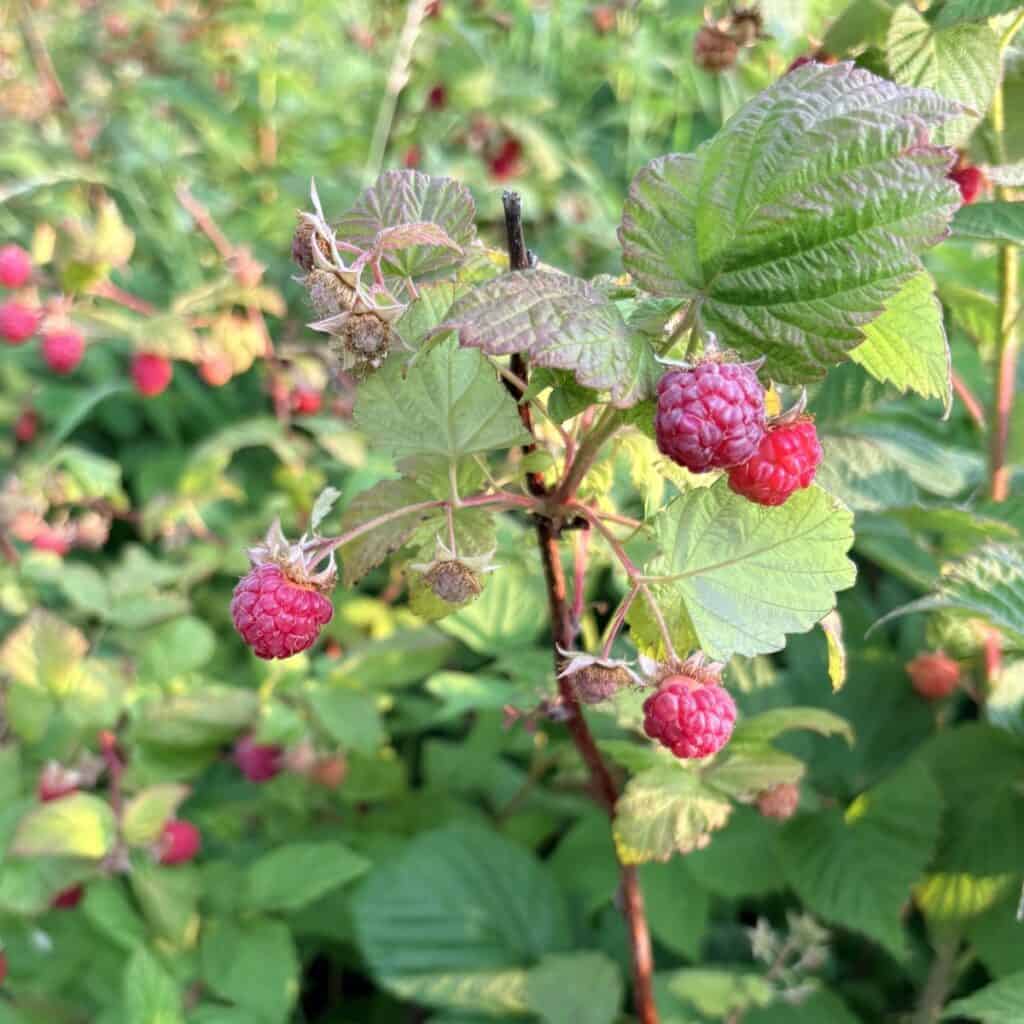
One raspberry plant needs about 4 square feet of growing space, or a 2 foot by 2 foot section, to grow and produce well.
What is square foot gardening?
Square foot gardening is a great way to maximize raspberry production on every inch of your growing space. Learn more about square foot gardening here.
You can have an abundant raspberry harvest even with a modest amount of space. Reduce your dependence on the grocery store and save money by growing your own raspberries.
Mel Bartholomew was the originator of the popular square foot gardening method. He was an American engineer, gardener, and businessman. He adapted techniques to grow a community garden in New York that removed many of the labor intensive aspects of gardening that discouraged many new gardeners. Growing more in less space and increasing access to gardening was his goal.
His methods allowed maximum harvest in small spaces by dividing raised beds into 1-foot squares. These methods maximized the production of the growing area. After developing this new square foot gardening method, he said, “I garden with a salad bowl in mind, not a wheelbarrow.” In 1981, he published his first book Square Foot Gardening.
Tips for Growing Raspberry Plants in a Square Foot Garden
Spacing Requirements
Each raspberry plant needs about 4 square feet of growing space, or one plant per 2 foot by 2 foot section. Unlike many square foot garden vegetables, raspberries are perennial and spread through underground runners, so they will naturally fill in the space around them over a few seasons. Give them room to expand, or plan to thin new canes each spring to keep them in check.
Weather Requirements
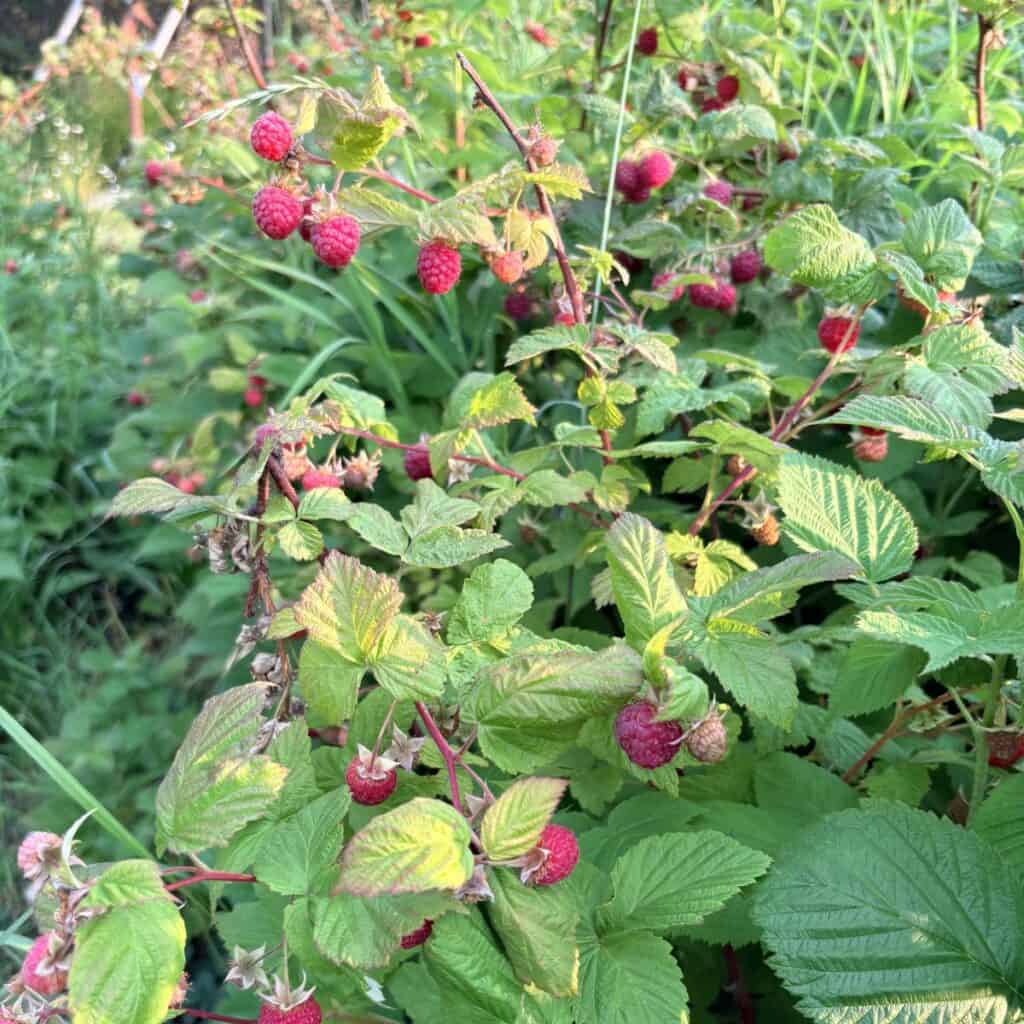
Raspberries are a cold hardy perennial and grow well in USDA zones 3 through 9. Plant bare root canes in early spring as soon as the soil can be worked, or in fall in milder climates. Established raspberry plants will go dormant over winter and start growing again each spring.
Sunlight Requirements
Raspberries need full sun to produce their best harvest, at least 6 hours of direct light a day. I learned this the hard way and planted my raspberries in the shade of a large tree. They never produced very well until we chopped that tree down. They will tolerate a bit of afternoon shade in especially hot climates, but plants in full sun will always outproduce shaded ones.
Water Requirements
Raspberry plants need about 1 to 2 inches of water per week, with extra attention during flowering and fruiting when consistent moisture matters most. Water at the base of the plant rather than overhead if possible to help reduce the risk of fungal disease on the leaves and canes. Well-watered raspberries will produce more and bigger berries.
Best Soil for Raspberries
Raspberries grow best in well-drained soil rich in organic matter. They prefer a slightly acidic soil with a pH between 5.6 and 6.2. The best way to understand the soil in your garden is to get a soil test.
If your soil is less than ideal, work in a few inches of compost before planting your raspberry canes.
Mulching Raspberries
A layer of straw or wood chip mulch around the base of your raspberry plants helps hold in moisture, suppress weeds, and protect shallow roots through temperature swings. This also improves your soil as the mulch breaks down over time. I try to apply a layer of compost one year, and then a layer of wood chip mulch the next year. This alternating mulch routine has produced a very productive soil that my raspberries are loving!
Supporting Raspberry Canes
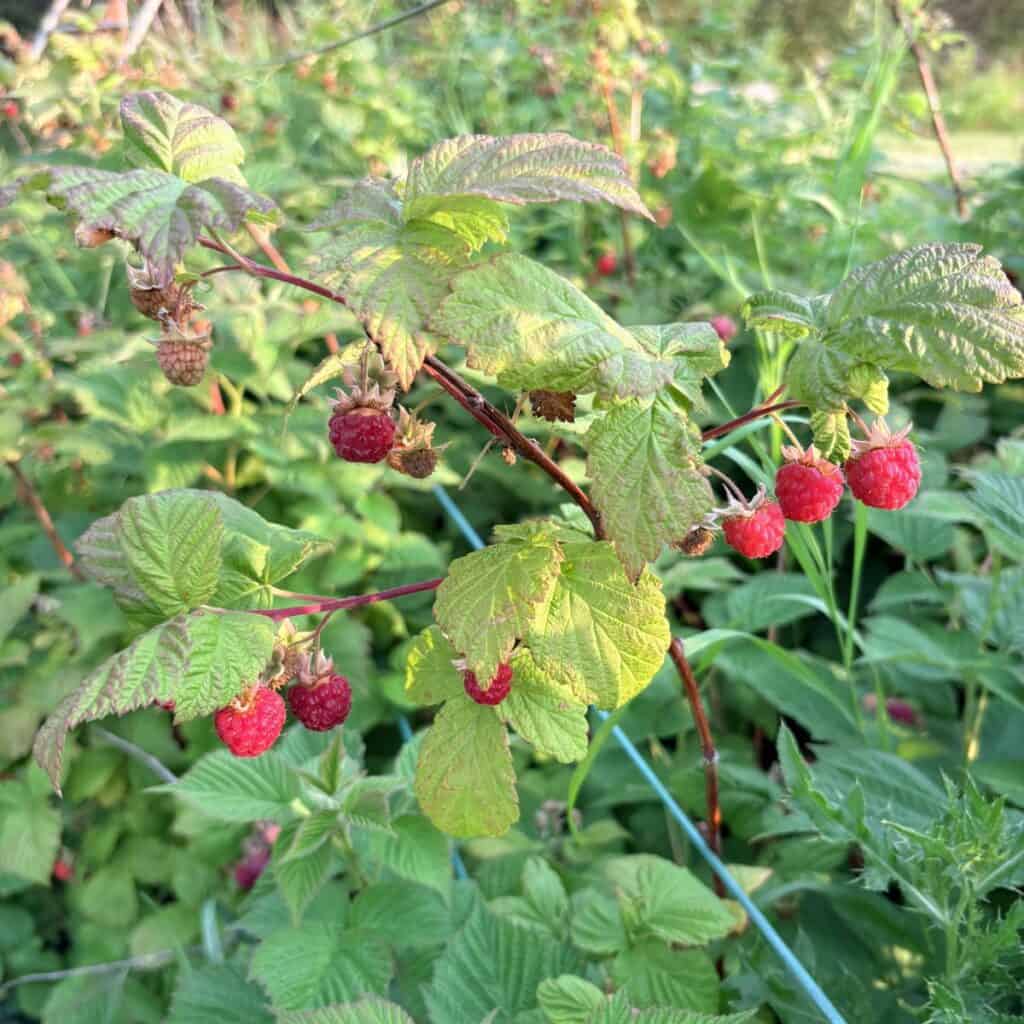
Raspberry canes benefit from some kind of support as they grow, especially once they are loaded with fruit. A simple wire trellis strung between posts works well and keeps canes from flopping over or trailing on the ground, which also makes harvesting much easier. Raspberry trellis ideas range from simple to complex, but don’t let this step scare you away from growing raspberries. Simple t-posts and wire or sturdy string work well for supporting raspberries.
Common Raspberry Pests, Diseases, and Problems
- Cane borers: cause wilting and drooping at the tops of canes.
- Spider mites: feed on the undersides of leaves, especially in hot weather.
- Aphids: feed on new growth and can spread plant viruses over time.
- Cane blight: appears as dark, sunken areas on canes, usually at wound sites.
- Root rot: most common in soil that stays too wet, causing wilting and cane dieback.
Good spacing, proper pruning, and well-drained soil go a long way toward preventing most of these problems before they start.
Harvesting Raspberries
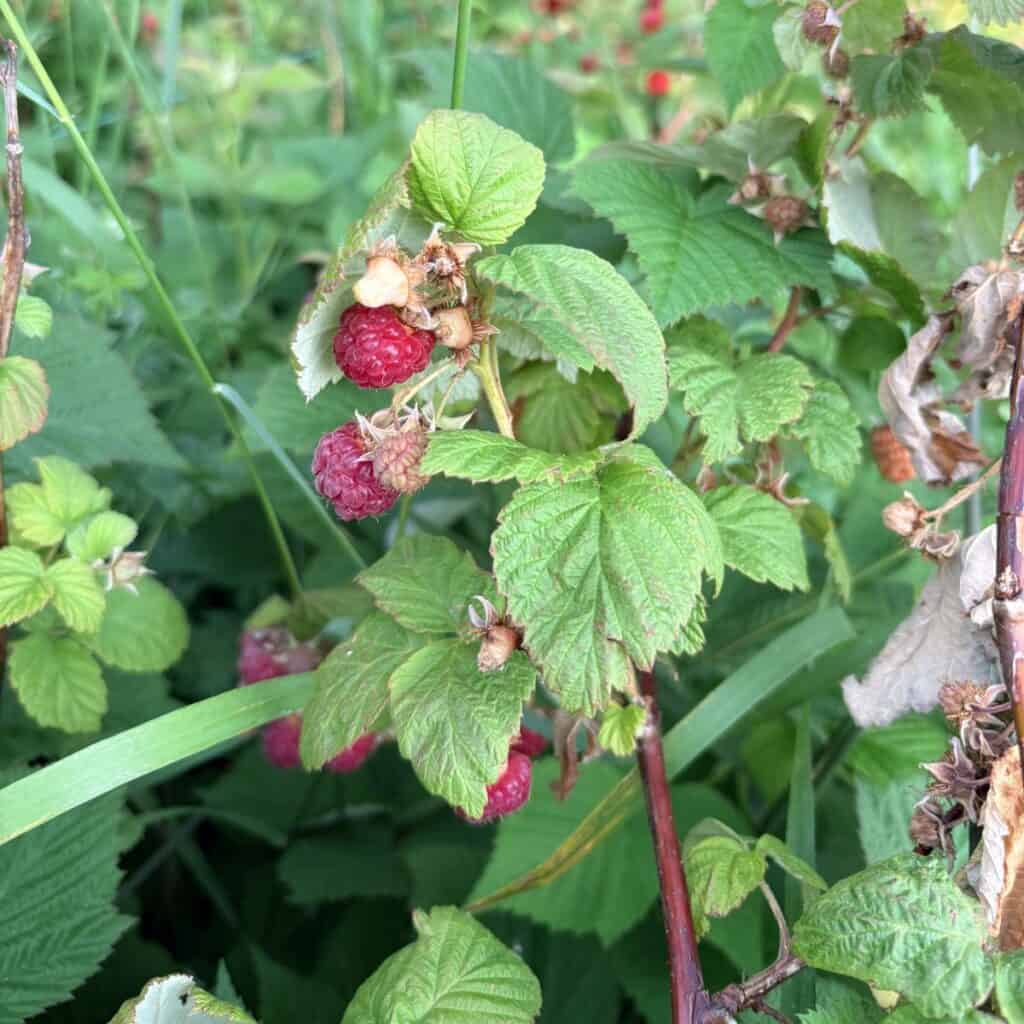
Raspberries are ripe when they have reached their full, deep color and slip off the cane easily with just a gentle tug. They do not continue to ripen once picked, so it is best to harvest only fully colored berries. Check your patch every few days during peak season, since ripe berries can go from perfect to overripe quickly in warm weather. When my raspberries are at peak production in July and August, I end up picking raspberries every other day to stay on top of them!
Wondering what to do with all those raspberries? Here’s a delicious raspberry jam recipe that is a staple at our house.
How to calculate square foot gardening plant density: A simple method
- Locate the spacing recommendation for your plant.
- Divide the width of your planting area by the required spacing to find how many plants fit across.
- Divide the length of your planting area by the required spacing to find how many plants fit down.
- Multiply your two answers together to get the total number of plants for that section.
FREE Printable Square Foot Gardening Template
This template includes square foot gardening spacing requirements for all common vegetables and fruits grown in the home garden. Plan out your square foot garden grid using this helpful information!
Raspberries can successfully be grown in small gardens, dedicated berry beds, or worked into your existing square foot garden layout. A little planning now means a bigger harvest for years to come. Wishing you a bountiful harvest!
Pin For Later
More Square Foot Gardening Ideas:
- [Square Foot Gardening with a Free Printable Template]
- [How Many Cucumber Plants per Square Foot]
- [How Many Spinach Plants per Square Foot]
- [How Many Jalapeño Plants per Square Foot]

East Fork Growing LLC is a participant in the Amazon Services LLC Associates Program, and the NutriMill affiliate program. These affiliate advertising programs are designed to provide a means for us to earn fees by linking to Amazon.com, NutriMill.com and affiliated sites. These products do not cost anymore to you, but we earn a small commission if you use our links. Thanks for your support!