Growing Sunflowers: A How-To Guide for Beginners
If there’s one flower that makes a garden feel alive, it’s a sunflower. Those big, bright yellow blooms nodding in the summer breeze just do something for the soul. I’ve been growing sunflowers for many years, and I can tell you firsthand that they are one of the easiest flowers you’ll ever grow.
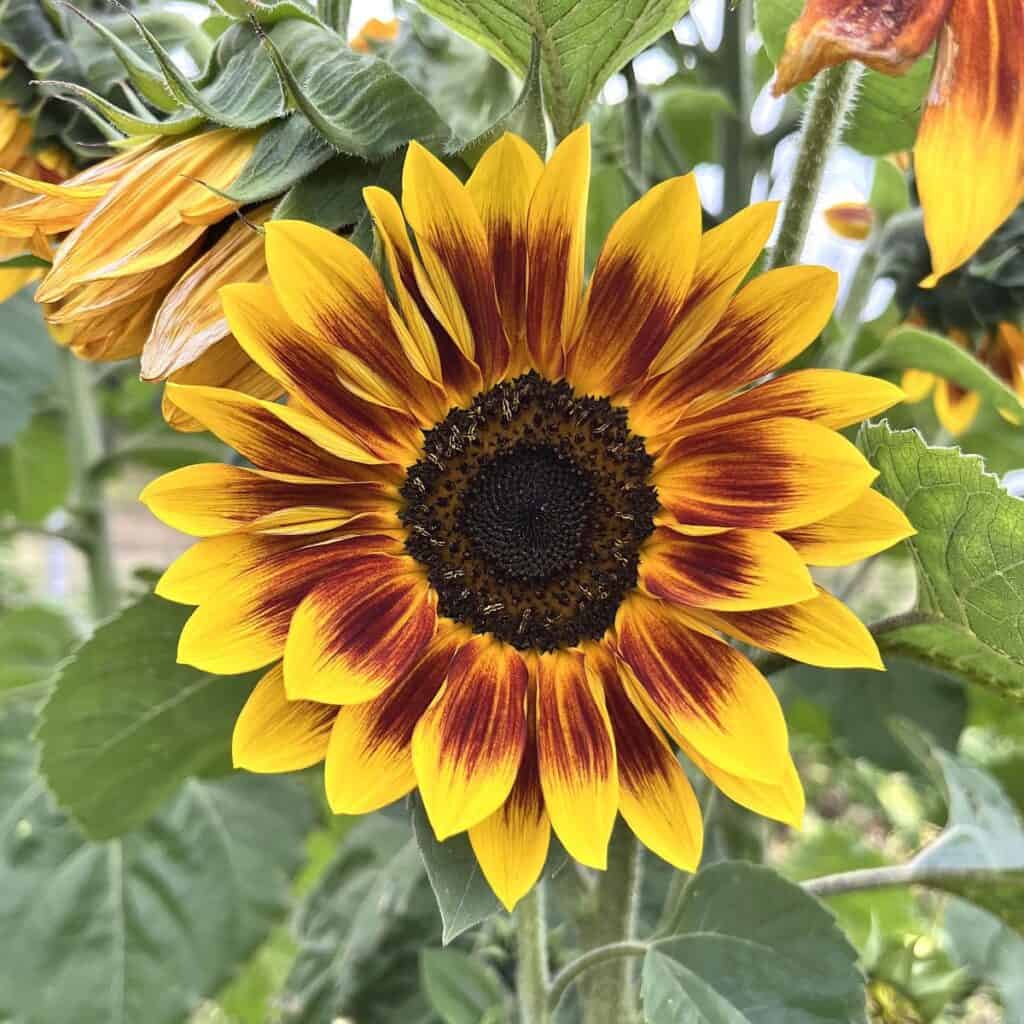
Whether you’ve got a sprawling backyard or just a sunny spot on a patio, there’s a sunflower variety out there for you. This guide will walk you through everything you need to know, from choosing the right type to saving seeds at the end of the season.
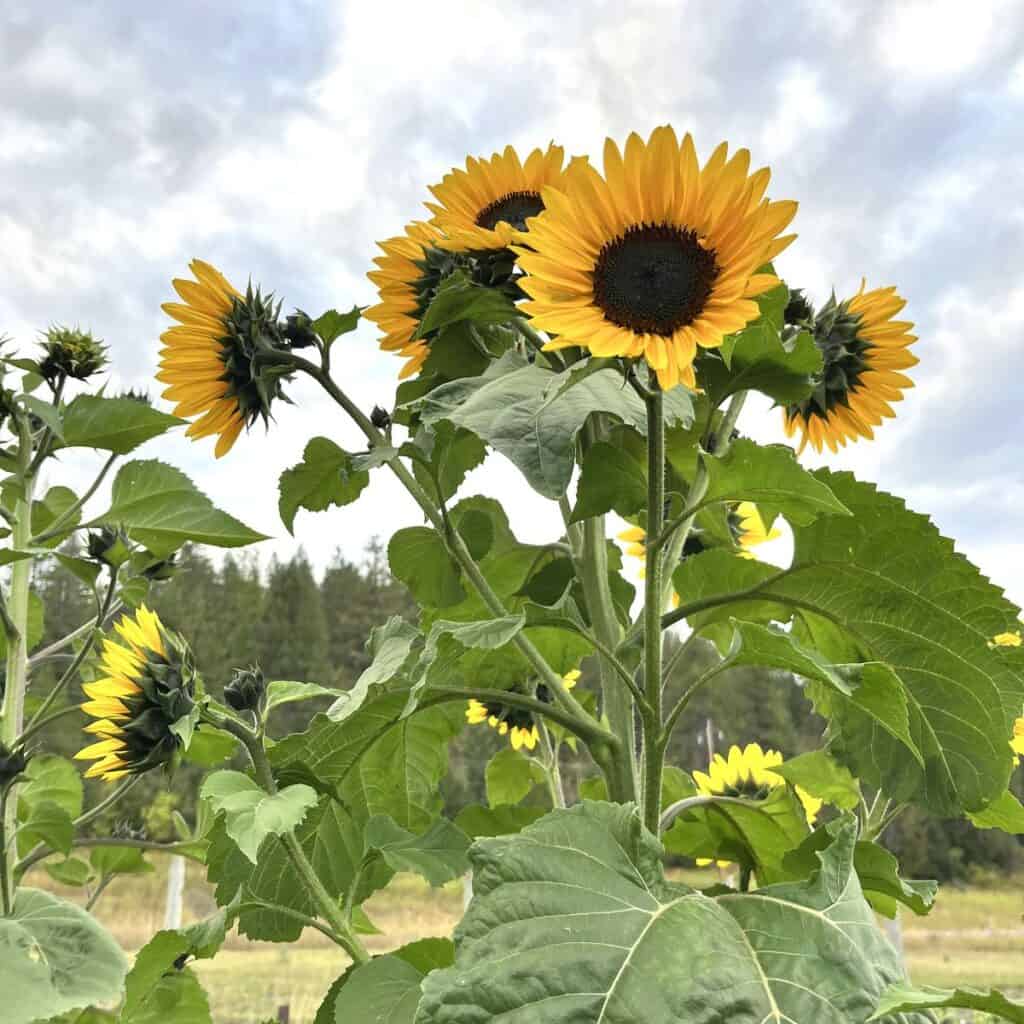
I love growing sunflowers inside my vegetable garden. It gives my garden a diversity of color, height, and form that really contributes to a beautiful, productive space.
Why You Should Grow Sunflowers
Sunflowers are the ultimate low-maintenance garden plant. They’re an annual plant that grows fast, blooms big, and rewards even the most beginner home gardeners with very little effort. Once you grow them the first time, I promise you’ll be hooked.
Beyond being beautiful, sunflowers are incredibly practical. They make excellent cut flowers for bouquets, their seed heads attract birds and pollinators, and you can even harvest sunflower seeds for snacking or pressing into sunflower oil. There’s honestly not much they can’t do.
Types of Sunflowers
Before you buy your first seed packet, it helps to know a little about the different varieties of sunflowers available. There are dozens to choose from, so understanding the basics will help you pick the best fit for your garden.
Annual Sunflowers vs. Perennial Sunflowers
Most garden sunflowers are annual sunflowers, meaning they grow, bloom, set seed, and die all in one season. Annual types include the classic Helianthus annuus, which is what most people picture when they think of a sunflower. Perennial sunflowers do come back year after year, but they tend to have smaller flowers and spread more aggressively than annual types.
For most home gardeners, annual sunflowers are the way to go. They’re easy to control, come in an incredible range of sizes and colors, and produce reliably in a single season. If you want that big, dramatic look in your garden, annual types are your best bet.
Tall Varieties
If you want that classic, towering look, tall sunflowers are what you’re after. The most well-known is Russian Mammoth, a giant sunflower that can reach 10 to 12 feet tall with massive seed heads that are beloved by birds. Taller varieties are a great choice if you want a dramatic backdrop or a privacy screen along a fence line.
Keep in mind that tall varieties need a little extra support in strong winds. One year here at the East Fork, we had a massive windstorm at the end of July that tipped over all my beautiful sunflowers. It made me so sad. Planting them near a fence or wall can help protect the plants from blowing over or those heavy heads from snapping off. A little extra effort to support them is worth your time!
Dwarf Varieties
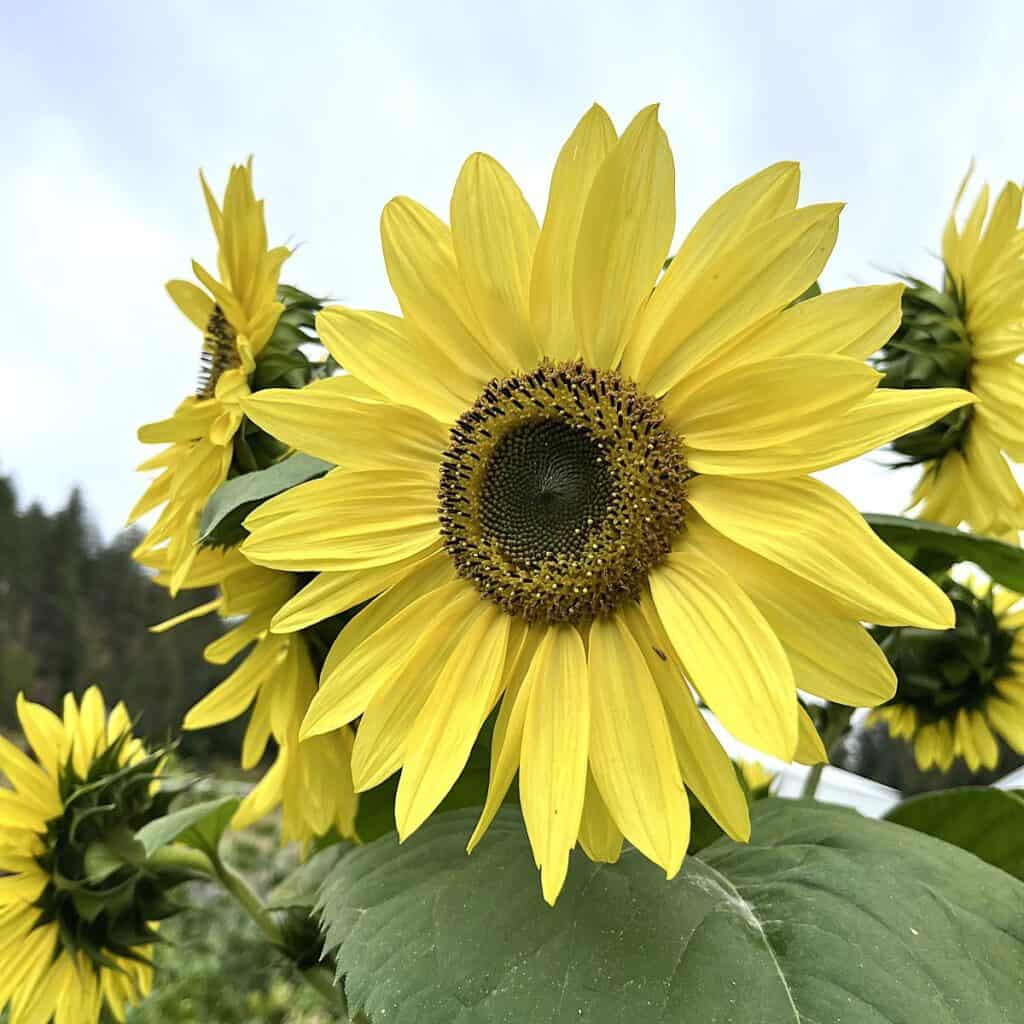
Don’t have a lot of space? Dwarf sunflowers are a fantastic solution for small spaces, containers, or front borders. Dwarf sunflowers typically top out at 1 to 3 feet and still produce cheerful blooms without taking over the garden. Lemon Queen is a favorite of mine. She’s a shorter, multi-branching variety with pale yellow petals and brown centers that absolutely lights up a garden bed.
Smaller varieties are also a good choice for windy spots where giant sunflowers would struggle. They’re sturdy, compact, and just as charming.
Growing Sunflowers from Seed
Choosing the Right Spot
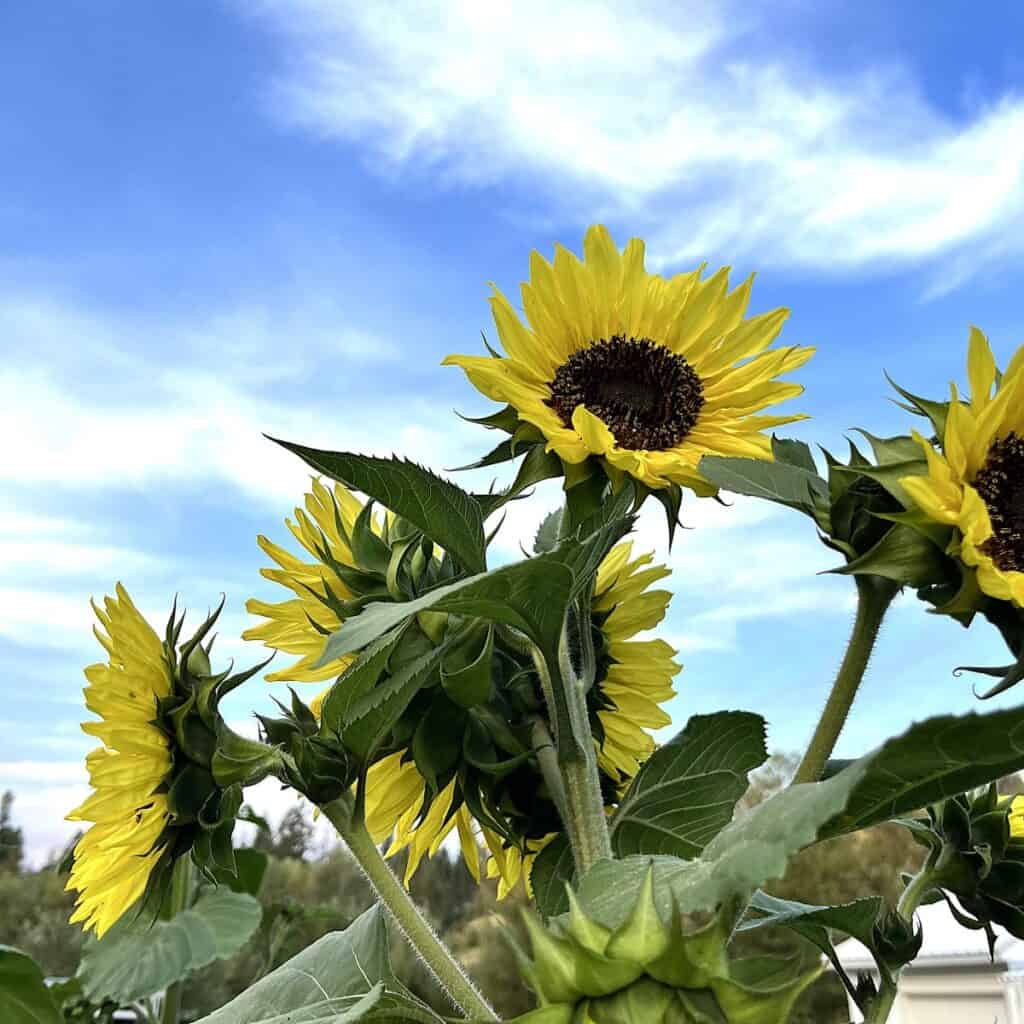
Sunflowers need full sun, and I mean full sun. At least 6 to 8 hours of direct sunlight per day is a must for best results. A sunny spot that gets afternoon sun is ideal, as sunflowers will literally turn their heads to follow the light throughout the day.
They also need well-draining soil. Sunflowers aren’t fussy about soil fertility, but they won’t tolerate wet feet. If your soil holds water, work in some organic matter to improve drainage before planting.
When to Sow Seeds
Sunflowers are warm-season plants, so timing matters. Wait until all danger of frost has passed before you sow seeds directly in the garden. In most regions, that means late spring or early summer. In warmer climates, you can sow seeds as early as late March.
You can also start seeds indoors in early spring on a sunny windowsill, about 2 to 3 weeks before your last frost date. Just be careful. Sunflower seedlings don’t love having their roots disturbed, so transplant gently when young plants are still small. Make sure there’s no risk of frost before moving them outside.
How to Plant Sunflower Seeds
Sunflowers are best direct-sown into the garden because they develop a strong root system quickly and don’t love being moved. Sow seeds about 1 inch deep directly into the soil surface of a prepared bed. Space seeds 6 inches apart for smaller varieties and up to 24 inches apart for tall sunflowers.
Water well after planting and watch for sunflower seedlings to emerge within 7 to 14 days. Once true leaves appear, thin plants to their final spacing so each plant has plenty of room for root growth and air circulation. Thinning feels hard, I know, but it makes a big difference in the size and health of your final plants.
Caring for Sunflower Plants
Watering
Young plants need consistent moisture while they’re getting established. Once sunflower plants are a few inches tall and have a strong root system, they become quite drought-tolerant. Water deeply once or twice a week rather than a little every day. This encourages deep root growth rather than shallow surface roots.
During the hottest part of summer, keep an eye on your sunflower leaves. Wilting in the afternoon heat is normal, but if they’re still drooping in the morning, they need more water.
Fertilizing
Sunflowers are considered heavy feeders, especially when you’re growing giant sunflowers or want larger flowers. Work well-rotted manure or a slow-release granular fertilizer into the soil before planting for the best results. Avoid over-fertilizing with nitrogen once the plants start to bud. Too much nitrogen encourages leafy growth at the expense of blooms.
If you’re growing in containers, you’ll want to fertilize more regularly since nutrients wash out of pots faster than in garden beds. A balanced fertilizer every few weeks will keep your sunflower plants happy and blooming.
Staking Tall Varieties
Taller varieties often need some support, especially in areas prone to strong winds. Use bamboo stakes or garden posts for single plants, and connect them with garden twine for a row. Get stakes in place before the plants get too tall. Sunflower roots spread wide and shallow, so driving a stake in late can damage the root system.
Succession Planting for Continuous Blooms
One of my favorite tricks is succession planting. Sow a new batch of sunflower seeds every 2 to 3 weeks from late spring through early summer. This gives you a steady stream of blooms rather than one big flush that’s over before you know it. Succession plantings are especially worth it if you’re growing sunflowers as excellent cut flowers for your home or for giving away.
Single stems make the most beautiful, simple bouquets. Growing a cutting patch with succession plantings means you’ll have fresh sunflowers on your kitchen table from midsummer all the way into fall.
More on succession planting: Maximize Your Space: A Guide to Succession Planting
Common Problems with Growing Sunflowers
Downy Mildew and Powdery Mildew
The two most common fungal issues you’ll encounter are downy mildew and powdery mildew. Powdery mildew shows up as a white coating on sunflower leaves, usually late in the season, and is often caused by poor air circulation. Downy mildew causes yellowing and distorted new shoots, and tends to appear in cool, wet conditions.
The best prevention is good spacing and avoiding overhead watering. If you do see mildew, remove affected leaves and improve airflow around your plants.
Snail Damage and Birds
Snail damage is most common on young plants and sunflower seedlings. Snails love to chew tender new growth overnight. A ring of coarse sand or crushed eggshells around single plants can help deter them. Once plants are a few inches tall, they typically outgrow snail damage fast.
Birds are another story entirely, and honestly, they’re a feature, not a bug! Once your seed heads mature, birds will flock to them. If you want to save seeds rather than share them with the neighborhood finches, use cheesecloth or paper bags secured over the heads. Or just leave them and enjoy the show. There’s nothing prettier than goldfinches working over a sunflower head on a bright fall morning.
Protecting from Pests
For gardens with persistent bird pressure on young plants, owl decoys placed near the garden can be surprisingly effective. Move them every few days so the birds don’t figure out the trick. A simple bird feeder placed away from your garden can also help redirect birds to a more convenient food source and keep them away from your sunflowers.
Growing Sunflowers in Containers
Dwarf sunflowers are the best choice for container growing. Use a pot that’s at least 12 inches deep to give roots room to grow. Sunflower roots need depth even in smaller varieties. Fill with a well-draining, peat-free compost or potting mix amended with rich soil and some organic matter.
One plant per pot is usually best for dwarf varieties; crowding an entire pot with multiple plants leads to competition and smaller, weaker blooms. Place your container in the sunniest location you have and water consistently, since pots dry out faster than garden beds.
Growing Sunflowers in a Square Foot Garden
Square foot gardening is all about making the most of every inch of space, and sunflowers fit right into that system. Tall varieties like Russian Mammoth work beautifully as a living trellis for climbing plants. Plant a sunflower in a square and let pole beans or other vining crops climb right up the sturdy stalk. You get two crops out of one square, and the beans actually benefit from the light shade the sunflower canopy provides during the hottest part of summer.
Dwarf varieties are a better fit if your square foot beds are smaller or if you are working in a raised bed with limited depth. Lemon Queen and other compact types produce generous blooms without shading out neighboring plants the way taller varieties can.
One thing to keep in mind with square foot gardening is spacing. Tall sunflowers do best with a full square to themselves, about 12 inches on each side, so their roots have room to spread without competing too hard with neighbors. Dwarf varieties can share a square with other low-growing companions if space is tight.
Sunflowers also pull pollinators into your garden, which benefits every vegetable growing nearby. That alone makes them worth a square or two in any productive food garden.
[Learn more about square foot gardening here.]
How to Save Sunflower Seeds
Saving sunflower seeds is one of the most satisfying things you can do in the garden. At the end of the season, let your seed heads dry fully on the plant. Once the back of the head turns yellow-brown and the seeds are plump and firm, it’s time to harvest.
Cut the heads and hang them in a dry place with good airflow for a few more weeks until completely dry. Then simply rub the seeds out with your hands or a stiff brush. Store them in a paper envelope or glass jar in a cool, dry place and you’ll have seeds to plant in the following year ready to go.
Saved sunflower seeds from open-pollinated varieties like Russian Mammoth will produce new plants true to the parent. Hybrid varieties may not, so check your seed packet before you plan on saving.
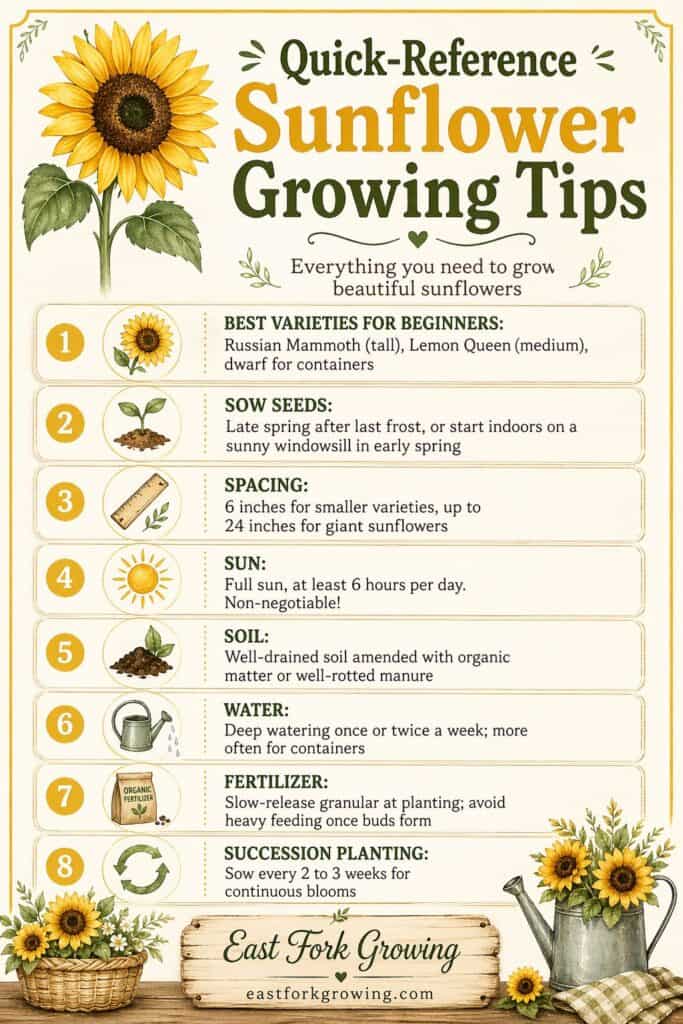
Quick-Reference Sunflower Growing Tips
- Best varieties for beginners: Russian Mammoth (tall), Lemon Queen (medium), dwarf varieties for containers
- Sow seeds: Late spring after the last risk of frost, or start indoors on a sunny windowsill in early spring
- Spacing: 6 inches for smaller varieties, up to 24 inches for giant sunflowers
- Sun: Full sun, at least 6 hours per day. Non-negotiable!
- Soil: Well-drained soils amended with organic matter or well-rotted manure
- Water: Deep watering once or twice a week; more for containers
- Fertilizer: Slow-release granular fertilizer at planting; avoid heavy feeding once buds form
- Succession planting: Sow every 2 to 3 weeks for continuous blooms
Final Thoughts on Growing Sunflowers
Growing sunflowers is one of those simple garden joys that never gets old. Whether you’re growing Russian Mammoth giants to watch the birds harvest in fall, or growing dwarf varieties in a pot on your porch, there’s a sunflower that fits your space and your life. They’re short-lived annuals that pack a whole season’s worth of beauty and usefulness into just a few months.
Start with one seed packet this season and see what happens. I think you’ll find, like I did, that a garden without sunflowers just doesn’t feel quite complete.
Happy growing, friend.

East Fork Growing LLC is a participant in the Amazon Services LLC Associates Program, and the NutriMill affiliate program. These affiliate advertising programs are designed to provide a means for us to earn fees by linking to Amazon.com, NutriMill.com and affiliated sites. These products do not cost anymore to you, but we earn a small commission if you use our links. Thanks for your support!
Pin for Later