
Lacto Fermented Pickles: Easy Homemade Recipe
If you’ve ever bitten into a truly good kosher dill pickle and wondered how to make that at home, this is your recipe. Think cold, snappy, tangy, garlicky pickle delicious. Lacto fermented pickles are one of the best things to come out of a bumper crop of cucumbers, and once you taste them, a jar of vinegar pickles from the store just won’t cut it anymore.
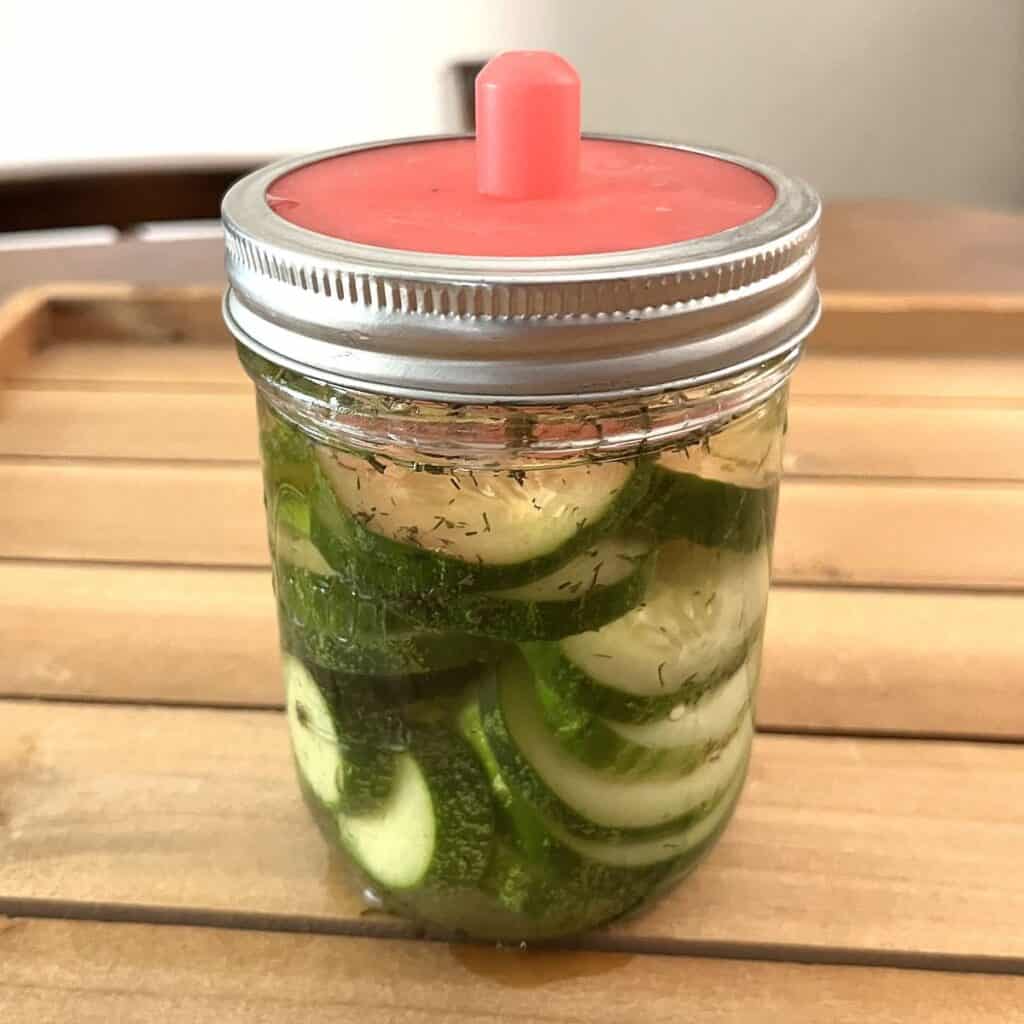
Fermented pickles require almost no equipment, no canning knowledge, and no special skills. Just fresh cucumbers from your own garden (or the farmers market), a salt brine, and a little patience.
If your cucumber plants have gotten ahead of you this season, this lacto fermented pickles recipe is exactly what you need.
What Are Lacto Fermented Pickles?
Lacto fermented pickles are an ancient method of food preservation. Long before refrigeration existed in the United States or anywhere else, lacto fermentation was one of the only food preservation methods available.
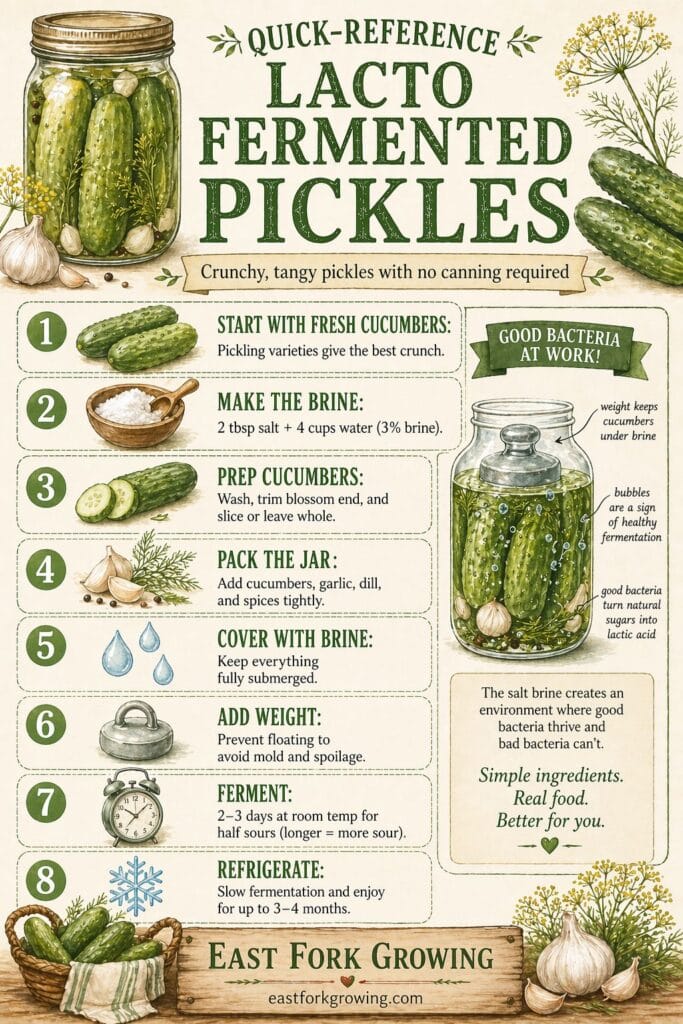
Here’s how the fermentation process works: you submerge cucumbers in a salt brine, which creates an anaerobic environment (no oxygen). In that environment, friendly bacteria called Lactobacillus (naturally present on the skin of vegetables) get to work. These good bacteria feed on the natural sugars in the cucumbers and produce lactic acid. The lactic acid acts as a natural preservative, lowering the pH of the brine and preventing bad bacteria from taking hold.
The result is a probiotic food that is alive with beneficial friendly bacteria that support your digestive system, immune function, and gut health. These are not the same as vinegar pickles, which are simply preserved in acid. Lacto fermented pickles contain actual living cultures — and that is the best thing about them.
The short version: salt brine + cucumbers + time = good homemade pickles that are genuinely good for you.
Half Sours vs. Full Sours
One of the great things about lacto fermented pickles is that you can control how sour they get.
Half sours are fermented for a shorter time: typically 2–3 days at room temperature. They’re bright green, still crisp, mildly tangy, and very fresh-tasting. This is what most people picture when they think of a classic kosher dill pickle.
Full sours are fermented much longer: 2 to 4 weeks. They turn olive-colored, develop a deeper and more complex flavor profile, and become intensely sour. Think of the barrel pickles at a classic deli. These are the real pickles that fermentation enthusiasts dream about.
This recipe produces half sours with a 3-day ferment, which is a great place to start. Next time, try leaving a jar out for a full week or two and see how your flavor preference changes.
Why You’ll Love This Lacto Fermented Pickles Recipe
- No water bath canning. This is not a traditional canning recipe. No boiling, no pressure canner, no special processing.
- Genuinely gut-healthy. These are a true probiotic food — living cultures that benefit your digestive system.
- Great flavor in every bite, with a spice profile you can completely customize.
- A great way to use a bumper crop of cucumbers from your own garden.
- Easy enough for your very first jars of lacto-fermented anything.
Ingredients
- 4 cups filtered water
- 2 tablespoons sea salt (non-iodized)
- Pickling cucumbers, sliced (enough to fill 2 pint jars)
- 1/2 teaspoon whole peppercorns per jar
- 1 fresh garlic clove per jar
- 1 sprig fresh dill per jar
- Optional for great flavor: dill seed, mustard seeds, dill weed, or a pinch of chili flakes
- Optional tannin source: 1 bay leaf, grape leaf, or oak leaf per jar (see below)
A Note on Cucumbers
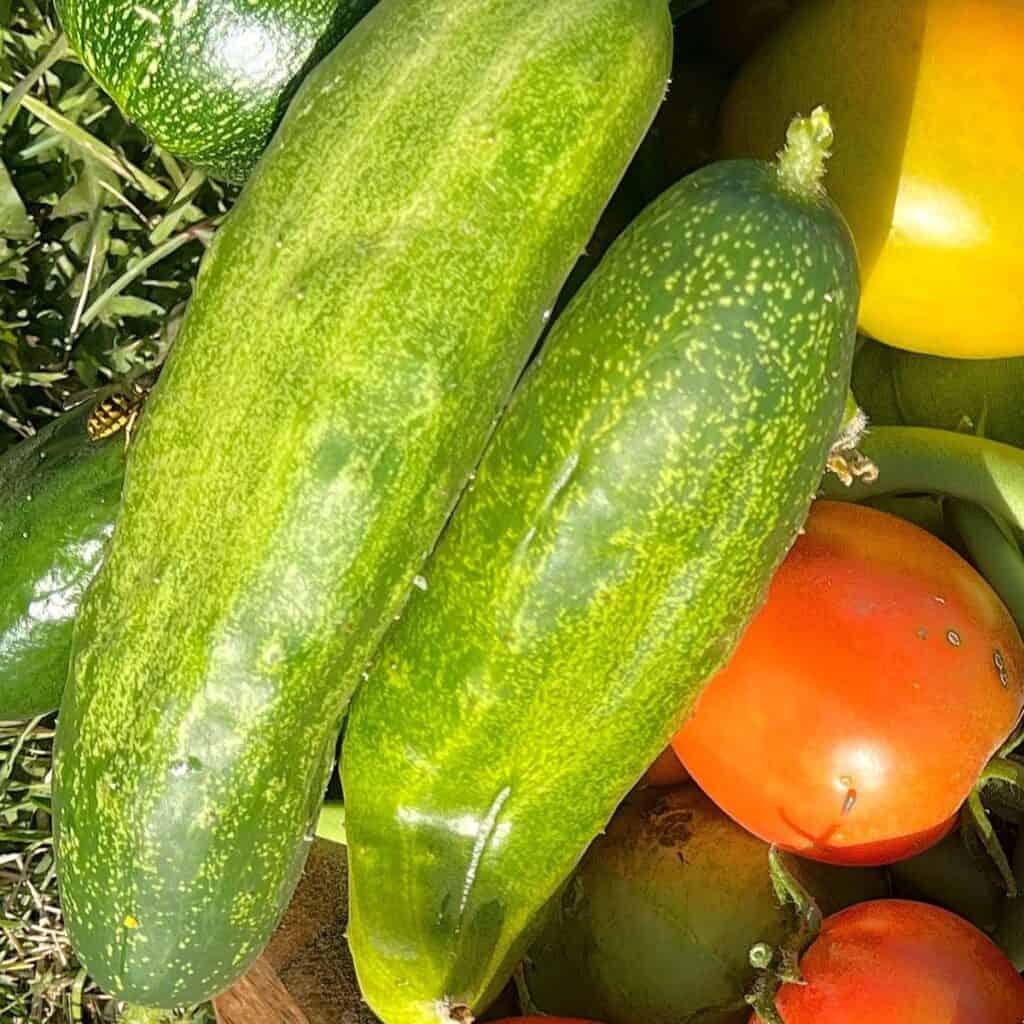
The quality of the vegetable matters enormously here. Pickling varieties (Kirby, National Pickling, Boston Pickling, Calypso, or Northern Pickling) work best because they have thinner skins, smaller seeds, and less water content than slicing cucumbers. They hold their crunch through the fermentation process far better than English or garden salad cucumbers. Harvest small cucumbers from your own garden (around 4 inches) and get them into brine the same day for the best results.
How Much Salt to Use
How much salt you use is one of the most important decisions in this recipe. This recipe uses a 3% salt brine (2 tablespoons sea salt per 4 cups filtered water). That ratio is safe, effective, and produces a brine that isn’t overwhelmingly salty.
Too much salt may prevent fermentation entirely by killing off the good bacteria along with the bad. Too little salt allows bad bacteria to survive. Measure carefully, especially with your first jars. Do not use iodized table salt. The iodine inhibits good bacteria and can prevent fermentation. Fine sea salt, Redmond real salt, or plain pickling salt are all good choices.
A Note on Filtered Water
Filtered water is strongly preferred. Heavily chlorinated municipal water can inhibit the fermentation process, since chlorine is designed to kill bacteria. If filtered water isn’t available, let tap water sit uncovered for a few hours to allow chlorine to off-gas before using.
The Secret Ingredient for Crunchy Pickles: A Tannin-Containing Leaf
Cucumbers contain enzymes, especially concentrated at the blossom end, that break down cell walls and lead to soft pickles. Adding a tannin-containing leaf counteracts this naturally. A bay leaf, grape leaf, oak leaf, or even a plain tea bag tucked into the bottom of the jar all work. This small step makes a real difference for crunchy lacto fermented pickles.
Equipment You’ll Need
- Wide-mouth mason jar — a wide-mouth mason jar makes it much easier to pack cucumbers tightly; pint or quart size both work
- Fermentation weight — keeps cucumbers submerged under the brine
- Fermentation lid — allows CO2 to escape without letting outside air in
Fermentation Lid Options
One of the most common questions from people making their first jars of lacto fermented pickles is what kind of lid to use. The goal is simple: CO2 builds up during the fermentation process and needs somewhere to go, while outside air and contaminants need to stay out. Here are your options:
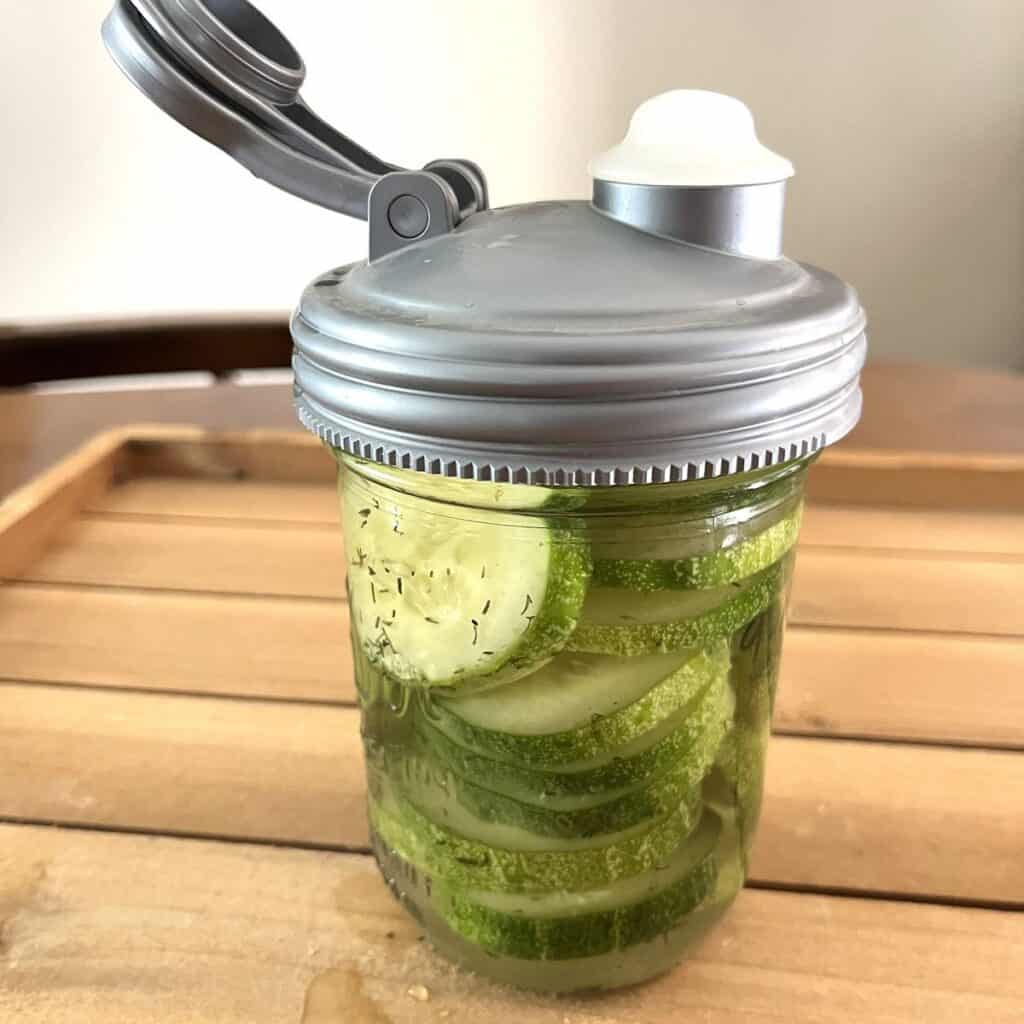
Airlock Lids (Two-Piece) These lids include a small water-filled airlock that allows gas to bubble out while keeping air from entering the jar. They create a true anaerobic environment and are completely hands-off — no daily burping required. Great for a large jar or a 1-gallon jar of pickles. 👉 [Buy Airlock Lids Here]
Silicone Waterless Airlock Lids A newer style that uses a silicone valve instead of a water chamber. Low-profile, easy to clean, and fits any standard wide-mouth mason jar. Very popular with regular fermenters. 👉 [Buy Waterless Airlock Lids Here]
Pickle Pipe (One-Piece Silicone) A pickle pipe is a simple silicone disc with a built-in pressure-release valve that sits right on top of the jar ring. It’s inexpensive, beginner-friendly, and one of the most popular options for home fermenters. Just set it and forget it. 👉 [Buy Pickle Pipes Here]
Loose Mason Jar Lid In a pinch, a standard lid screwed on very loosely works fine. Check and “burp” the jar once a day by briefly loosening the lid to release built-up pressure.
For occasional fermenters, any of these methods works. If you plan to keep jars of sauerkraut, probiotic pickles, and other fermented vegetables going on a regular basis, investing in a set of pickle pipes or airlock lids is the best thing you can do to simplify your process.
How to Make Lacto Fermented Pickles
Step 1: Make the Salt Brine
Combine 4 cups of filtered water with 2 tablespoons sea salt. Stir until the salt is completely dissolved. This is your brine solution. Set it aside while you prep the cucumbers.
Step 2: Prep Your Cucumbers
Wash cucumbers thoroughly. Slice off the very tip of the blossom end of each cucumber — this is where softening enzymes are most concentrated, and removing it helps keep your lacto fermented pickles crunchy. Slice into rounds, chips, or spears, or leave them whole.
Step 3: Pack Cucumbers Into the Jar
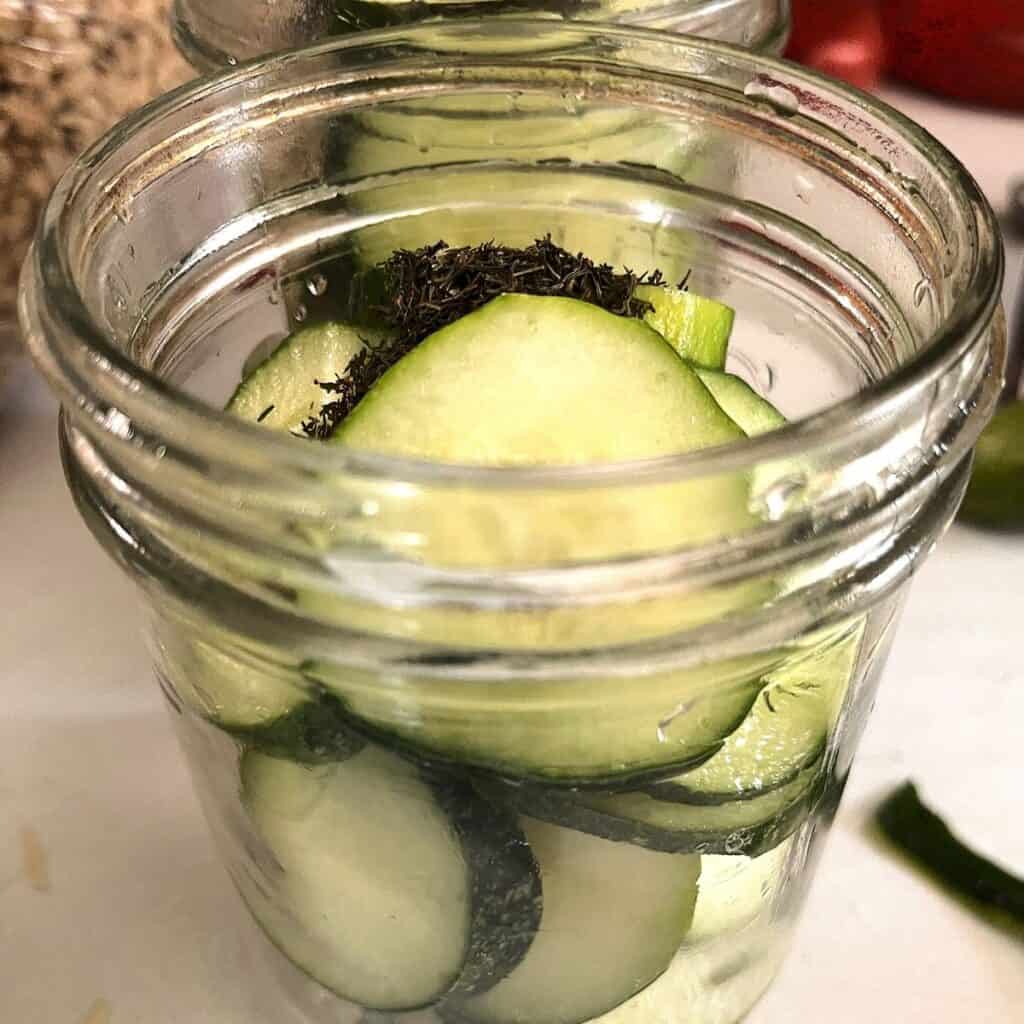
Pack cucumbers tightly into a clean wide-mouth mason jar without crushing them. Stop about 1 inch from the top of the jar to leave room for the brine and fermentation weight.
Step 4: Add Aromatics to Each Jar
Place spices in the bottom of the jar before you pack cucumbers, or tuck them in alongside:
- 1/2 teaspoon whole peppercorns
- 1 fresh garlic clove, smashed or sliced
- 1 sprig fresh dill (or a pinch of dill weed or dill seed)
- Optional: a pinch of mustard seeds for extra depth of flavor
- Optional: 1 bay leaf or grape leaf tucked against the side of the jar for tannins
Step 5: Pour the Brine
Pour the salt brine over the cucumbers until they are completely submerged, leaving about 1/2 to 1 inch of headspace at the top of the jar.
Step 6: Add a Fermentation Weight
Place a fermentation weight on top of the cucumbers to hold them under the brine. Keeping everything submerged is critical. Anything that floats above the brine and is exposed to air can develop mold and ruin the batch. [These are the weights I use.]
Step 7: Lid and Ferment
Fit the jar with your fermentation lid of choice. Set it away from direct sunlight. A basement, lower cupboard, or pantry shelf is ideal. Keep it at room temperature, ideally between 60–70°F.
Check after 2–3 days. Look for:
- Bubbles rising when you tap the jar
- Cloudy brine (this is a great sign that the fermentation process is working)
- A tangy, garlicky, fresh smell
Taste a pickle. If it has the flavor you want, it’s ready. For half sours, 3 days is usually the sweet spot. If you’d like more sourness, leave it out another day or two. The longer your lacto fermented pickles sit at room temperature, the more sour they become, and the softer the texture gets.
Step 8: Refrigerate
Once the lacto fermented pickles reach your preferred flavor, move the jar to the refrigerator. The fermentation process slows dramatically in the cold but doesn’t stop entirely. For best quality, use within 3 to 4 months.
Tips for the Best Lacto Fermented Pickles
Start with the freshest cucumbers you can find. The quality of the vegetable at the start determines the quality of the final jar of pickles. Day-of-harvest cucumbers from your own garden or a local farmers market will always outperform store-bought cucumbers that have been sitting for days.
Ferment at cooler room temperature. Between 60–70°F is ideal. Higher temperatures speed up the fermentation process but produce softer probiotic pickles.
Use a tannin-containing leaf. Bay leaves, grape leaves, and oak leaves, all contain tannins that keep pickles crunchy. This is one of the easiest and most effective tricks for good homemade pickles. A grape leaf from your own garden works beautifully.
Keep everything under the brine. A true anaerobic environment is what keeps good bacteria thriving and bad bacteria out. Use a fermentation weight every time.
Measure enough salt. A properly measured salt brine is what makes this safe and successful. Don’t eyeball it on your first jars.
What to Do With the Leftover Brine
Once your jar of pickles is gone, don’t pour that brine down the drain. It is packed with lactic acid and live good bacteria and has plenty of uses:
- Drink it as a probiotic shot — a small glass of brine is genuinely energizing and full of gut-supporting friendly bacteria.
- Use it to start your next batch — a splash of active brine gives the good bacteria in your next jar a head start.
- Stir it into salad dressings in place of vinegar for a more complex, fermented flavor.
- Add it to potato salad, deviled eggs, or coleslaw.
- Use it as a marinade for chicken or pork.
Troubleshooting Your Lacto Fermented Pickles
My brine is cloudy. This is completely normal. It means lactic acid-producing friendly bacteria are active and working. Cloudy brine is a good sign, not a problem.
I see white scum on top. A thin white scum is almost always kahm yeast, which is harmless. Skim it off with a clean spoon and continue. If you see fuzzy, colored mold (pink, black, or green), discard the batch and start fresh with clean equipment.
My pickles are soft. Usually due to fermenting at too warm a temperature, over-fermenting at room temperature, not removing the blossom end, or cucumbers floating above the brine line. A tannin-containing leaf, cooler ferment temperature, and a fermentation weight will all help next time.
Nothing is happening after 2–3 days. Check your salt measurement — too much salt will prevent fermentation by killing off good bacteria. Also check your water. Heavily chlorinated tap water is a common culprit. Make sure the jar is away from direct sunlight and sitting at actual room temperature.
My pickles smell off. Tangy, garlicky, and briny is right. Anything that smells truly foul or putrid, not just sour, is a sign of contamination, usually from dirty hands, utensils, or jars. Trust your nose and discard if in doubt.
Frequently Asked Questions
What is the difference between lacto fermented pickles and vinegar pickles? Vinegar pickles are preserved in an acidic solution of vinegar and water. They have no live cultures and are not a probiotic food. Lacto fermented pickles develop their acidity entirely through the natural fermentation process, producing lactic acid from good bacteria. They have a more complex, rounded flavor profile and are genuinely alive with friendly bacteria that benefit your digestive system and gut health.
How long do lacto fermented pickles last? In the refrigerator, for best quality use within 3–4 months. They continue to slowly ferment in the fridge and will eventually become very soft and sour. Most jars are finished well before then.
Can I make a larger batch? Absolutely. Scale up and use a quart-sized or 1-gallon jar. Keep the salt brine ratio the same: 2 tablespoons sea salt per quart of water. Pack cucumbers tightly all the way up.
Do I need a fermentation weight? It’s strongly recommended. Cucumbers that float above the brine and are exposed to air can develop mold and ruin the batch. A fermentation weight is a small investment that makes a big difference.
Can I add other vegetables? Yes. This same salt brine method works beautifully for fermented carrots, fermented jalapeños, and even pickled cloves of garlic. Once you have lacto fermented pickles down, jars of sauerkraut and other probiotic pickles are natural next steps.
Is lacto fermentation safe? Yes. When done with the correct salt brine ratio and proper technique, lacto fermentation is very safe. The lactic acid environment actively prevents bad bacteria from surviving. This ancient method of food preservation has been used reliably for thousands of years. Follow the recipe, use clean equipment, keep everything submerged, and you will be just fine.
Full Sours and Long Term Storage
Once you’ve made your first jars of half sours and loved them, try taking a batch all the way to full sours. Use a slightly stronger brine (up to 4.5%) and ferment at cooler temperatures for 2 to 4 weeks. These develop a deeply savory, complex flavor profile that is completely unlike anything you can buy. For long term storage in the refrigerator, full sours will keep for many months and continue to improve.
More Fermented Foods to Try
Once lacto fermented pickles feel like second nature, these are wonderful next projects:
- Fermented Salsa
- Sauerkraut (jars of sauerkraut are endlessly useful in the kitchen all winter)
- Fermented jalapeños
- Fermented garlic and pickled cloves
- Fermented carrots
- Fermented green beans


Lacto Fermented Pickles
Lacto fermented pickles are easier than you think! Learn how to make crunchy, tangy, probiotic dill pickles at home with just cucumbers, salt, water, and a few simple spices — no canning required.
Ingredients
- 4 cups filtered water
- 2 tablespoons non-iodized salt
- Pickling cucumbers, whole or sliced (enough to fill 2 pint jars)
- 1/2 teaspoon whole peppercorns per jar
- 1 fresh garlic clove per jar, smashed
- 1 sprig fresh dill per jar (or 1/2 tsp dill seed or dried dill weed)
- Optional: pinch of mustard seeds
- Optional: 1 bay leaf or grape leaf per jar (for crunch)
Instructions
- Stir 2 tablespoons sea salt into 4 cups filtered water until fully dissolved to make the salt brine.
- Wash cucumbers, slice off the blossom end, and cut to your preferred shape.
- Pack cucumbers tightly into a clean wide-mouth mason jar, stopping 1 inch from the top of the jar.
- Add peppercorns, fresh garlic clove, fresh dill, and any optional spices. Tuck a bay leaf or grape leaf against the side.
- Pour the brine solution over the cucumbers until fully submerged.
- Place a fermentation weight on top to keep everything below the brine line.
- Fit with a fermentation lid (pickle pipe, airlock lid, loose lid, or cloth secured with a rubber band).
- Set away from direct sunlight at room temperature (60–70°F) for 3 days.
- Check after 2–3 days for bubbles and cloudy brine — signs of active fermentation.
- Taste and refrigerate once probiotic pickles reach your preferred tanginess.
- Use within 3–4 months for best quality.
Notes
Filtered water is strongly preferred — chlorinated tap water can inhibit the fermentation process. Do not use iodized salt. For crunchier lacto-fermented pickles, ferment at cooler temperatures and include a tannin-containing leaf — bay leaf, grape leaf, or tea bag — in each jar. Cloudy brine is normal and desirable. White scum (kahm yeast) on top is harmless — skim it off and continue. Save the leftover brine as a probiotic shot or to jump-start your next batch of probiotic pickles.
Nutrition Information:
Yield: 16 Serving Size: 1Amount Per Serving: Calories: 0Sodium: 74mgCarbohydrates: 0gFiber: 0gProtein: 0g
Pin for Later
East Fork Growing LLC is a participant in the Amazon Services LLC Associates Program, and the NutriMill affiliate program. These affiliate advertising programs are designed to provide a means for us to earn fees by linking to Amazon.com, NutriMill.com and affiliated sites. These products do not cost anymore to you, but we earn a small commission if you use our links. Thanks for your support!