
Three Secrets for Light, Fluffy, Whole Wheat Sourdough Bread
There’s nothing quite like pulling a beautiful loaf of whole wheat sourdough bread from your dutch oven. But let’s be honest: whole wheat sourdough bread can be tricky for the home baker. That sticky dough and dense crumb can be frustrating, especially the first time you try a whole wheat sourdough bread recipe.

I’ve been there, friends. I’ve pulled out loaves that could double as doorstops. But after years of baking and testing, I’ve discovered three game-changing secrets that transform whole wheat bread from heavy and dense to light, fluffy, and absolutely delicious.
Why Whole Wheat Sourdough Bread Is Different
Whole wheat flour behaves completely differently than white flour or all purpose flour. When you mill a wheat berry, you keep all the bran and germ that white bread flour has removed. This makes whole grains incredibly nutritious, but that bran acts like tiny knives in your bread dough.
The bran cuts through the gluten strands that give your loaf of bread its structure and oven spring. Whole grain flours also absorb water differently than white flour, which means your dough needs special attention. Understanding these differences is your starting point for great results.
Don’t worry, you don’t need a bread machine sourdough recipe or fancy equipment beyond a large bowl and maybe a bench scraper. These secrets work whether you’re using a loaf pan, bread pan, or shaping a round loaf for your dutch oven.
Secret #1: The Autolyse (Your Game-Changer)
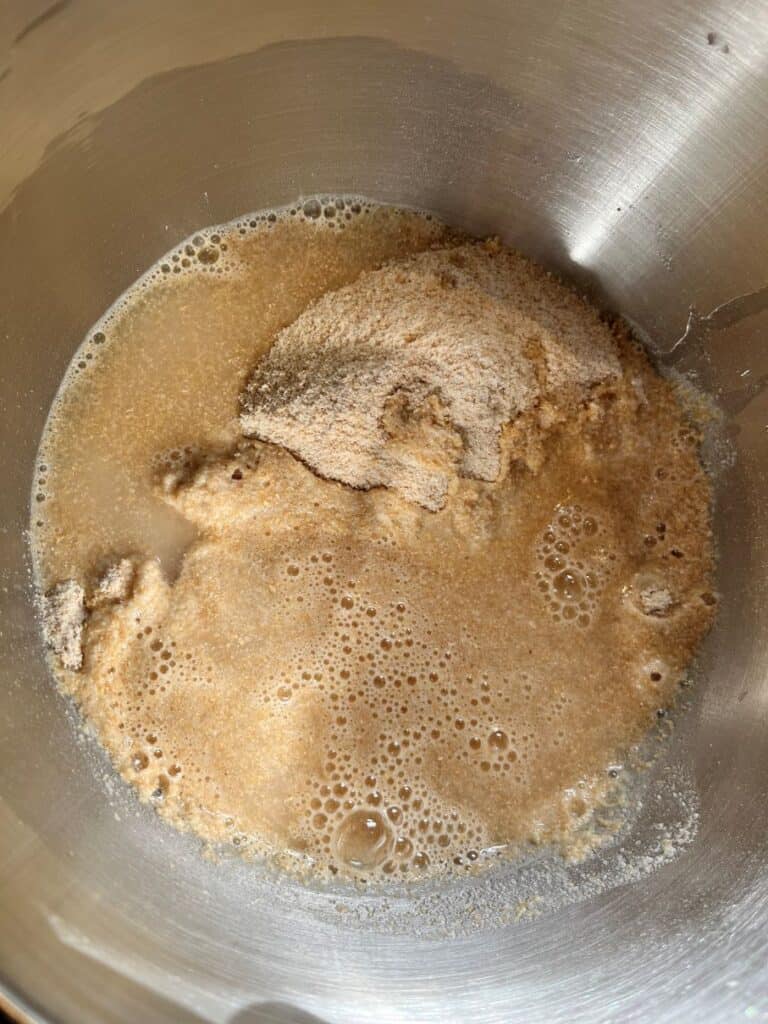
This is hands-down the best way to transform whole wheat sourdough. An autolyse simply means mixing your whole wheat flour and most of your warm water together, then letting the dough rest before adding your active sourdough starter and salt. This simple step makes an incredible difference in your final loaf!
Let that mixture sit for 30 minutes to an hour before adding the rest of your ingredients. This gives the bran a chance to soften and hydrate fully. The flour also begins developing gluten on its own, which means a lighter, more tender wholesome loaf with less work from you.
During this dough rest, the whole wheat flour absorbs the water and the bran particles begin to soften. This softening is crucial because it prevents that bran from tearing through your gluten strands later. Even just 30 minutes makes a noticeable difference in the texture of your bread.
If you’re short on time, even a shorter autolyse will help. But if you can give it the full hour, you’ll see even better results. This is one of those recipe steps that seems simple but creates magic in your finished loaf!
Secret #2: Embrace Higher Hydration, but Knead Well
Whole wheat flour is thirsty, much thirstier than white bread flour. Those bran particles and the whole grain structure absorb significantly more water than refined flours. If you try to use the same hydration level as classic sourdough bread made with purpose flour, you’ll end up with a dry, crumbly loaf.
For light, fluffy whole wheat sourdough, aim for 80% hydration or even higher. Yes, this creates sticky dough that might feel intimidating at first. But here’s the secret: wet hands are your best friend!
Keep a glass bowl of water nearby while you work. Dip your hands in water before handling the dough, and that sticky dough becomes totally manageable. You can also wet your bench scraper or wooden spoon when working with the dough.
Don’t panic if your dough feels wetter than any new recipe you’ve tried before. This higher hydration is what creates those beautiful open holes in the crumb and keeps your bread from being dense. Start with 80% and adjust from there, as every type of flour absorbs differently.
I like to knead and mix my whole wheat sourdough bread for a full 20 minutes in my stand mixer before the bulk ferment. If my dough is still sticky after 20 minutes of mixing, I know it’s ready to go into a glass bowl on the counter for 6-8 hours. I do not stretch and fold my whole wheat sourdough bread at all during the rise time. Just put it in the bowl and walk away for 6-8 hours or until it has doubled in size.

Secret #3: Gentle Handling and Patient Fermentation
This might be the most important secret for preventing dense whole wheat bread. Remember those tiny bran pieces I mentioned? They’re still in there, and they can tear your gluten strands if you’re too rough.
After you mix everything together in your large mixing bowl, resist the urge to keep touching the dough. Let it do its thing during the bulk fermentation time without disturbing it. Cover it with a tea towel or plastic wrap and place it in a warm place or at room temperature.
The dough will tell you when it’s ready by roughly doubling in size.
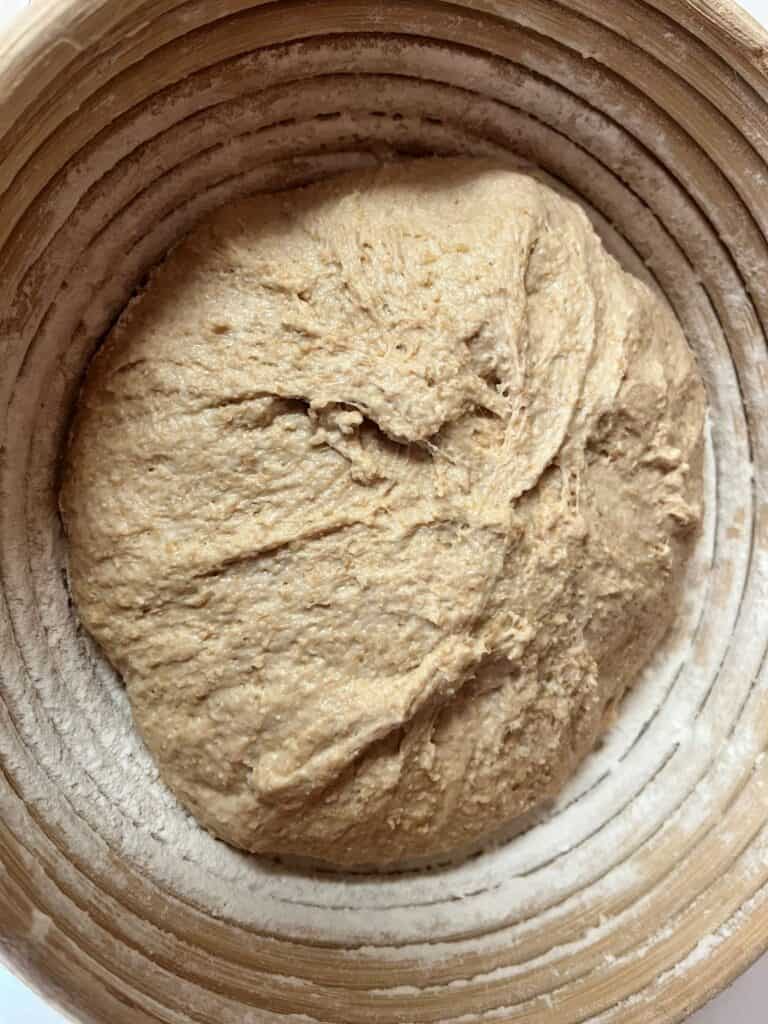
When it’s time to shape, dust your work surface with a little bit of all purpose flour to prevent sticking. Handle the dough as gently as possible while forming your round loaf or placing it in a bread basket. Be patient and gentle, this is where many bakers get too aggressive and deflate their beautiful loaf.
After shaping, let your dough rest for about an hour before baking. This final proof gives the dough just enough time to relax and puff up slightly. You can shape it directly on a piece of parchment paper if you’re using a dutch oven, which makes transfer super easy.
When you’re ready to bake, score the top of the dough with a razor blade to make patterns, or leave it alone for a more rustic look. Cold dough scores more cleanly, but room temperature dough works fine too. You’ll get beautiful oven spring and those gorgeous patterns on top of the loaf.
Why These Secrets Work Together
These three secrets create the perfect environment for light, fluffy whole wheat bread. The autolyse softens the bran and develops gluten before you even add your mature starter. Higher hydration keeps your bread moist and tender instead of dry and crumbly.
Gentle handling preserves the delicate gluten structure that whole grain flours create. By leaving the dough alone during bulk fermentation, you’re letting time and the fermentation process do the heavy lifting. The yeast and bacteria in your active sourdough starter work their magic without any interference.
Your first time trying these techniques, give yourself grace. Even experienced bakers need practice with sticky dough and high hydration. Keep those wet hands ready and trust the fermentation process!
I promise that once you nail these secrets, you’ll never go back to dense whole wheat bread. The texture rivals any bakery sourdough boule, with a tender crumb that’s perfect for sandwiches or toast with olive oil and sea salt.
Putting It Into Practice
Now that you know the secrets, you’re ready to try them! I’ve put together a complete whole wheat sourdough bread recipe that incorporates all three of these techniques with detailed recipe steps and a youtube video walkthrough.
Whether you’re grinding red wheat berries fresh or using store-bought whole wheat flour, these secrets will transform your baking. You don’t need spelt flour or special ingredients, just time, attention, and these proven methods.
Make sure your oven temperature is properly preheated before your dough goes in. I like to preheat my dutch oven for at least 30 minutes to get it blazing hot. This initial blast of heat creates incredible oven spring and that crispy crust we all love.
After you pull your bread from the oven, let it cool completely on a wire rack before slicing. I know it’s tempting to cut into it right away, but this cooling time lets the crumb set properly. Store your loaf in an airtight container or plastic bag to keep it fresh for days.

Your Journey to Better Whole Wheat Sourdough Bread
This is truly the best bread I’ve ever made with whole grains, and I’m a home baker who has tested countless loaves! These aren’t just tips, they’re the difference between okay bread and phenomenal bread.
The daily values might say whole wheat bread is healthier, but with these secrets, it’s also the most delicious. You’ll have a wholesome loaf that actually tastes better than white bread, with incredible texture and flavor. No more dense doorstops or crumbly disappointments!
So grab your large bowl, your wooden spoon or dough whisk, and get ready to create sourdough loaves that’ll make your family think you opened a bakery. Score the top, watch the magic happen in your hot oven, and prepare for the best bread of your life.
These secrets have been game-changers for me, perfected over many years of baking. The long time I spent testing different methods and troubleshooting problems has led to these three simple but powerful techniques. Now they’re yours to use and share.
Whether you’re baking whole wheat sourdough bread in a dutch oven, loaf pan, or bread pan, these principles apply. The bowl of a stand mixer can help with initial mixing if you prefer, but a large mixing bowl and wooden spoon work just as well. This is accessible to every home baker!
Your best whole wheat sourdough bread is waiting, friends. Give these secrets a try and watch your bread transform. Happy baking!
Pin for Later


East Fork Growing LLC is a participant in the Amazon Services LLC Associates Program, and the NutriMill affiliate program. These affiliate advertising programs are designed to provide a means for us to earn fees by linking to Amazon.com, NutriMill.com and affiliated sites. These products do not cost anymore to you, but we earn a small commission if you use our links. Thanks for your support!
Can I use whole wheat flour from the store? I do not have wheat berries and a mill.
You sure can!